30 May 2011

Cheese On Toast

This is how I prepare cheese on toast. If you follow my instructions you too will enjoy cheese on toast. It's not a matter of slapping on any old cheese onto any old slab of bread. Never. It's not a case of being a cheese expert. As the PG Tips Chimp once said 'It's the taste!' What you will need:

Cheese knife. Any old sharp knife could do but the addition of the cheese knife, a good one,  is more for appearance and confidence. 


Batch loaf. White probably. Unsliced. Or:

Cheese obviously. Cheddar. Medium is good but mature would be tastier. Don't be cheap or be daft enough to pay through the nose.


Oh one more thing...

The pepper mill is important. It's how it grinds and distributes the pepper. 
Now. Let's make some cheese on toast.

1. Switch the radio on, (BBC 6 music, I tend to listen to) put the kettle on and get your coat off. I'm presuming you've just returned from the shops. If your kitchen doesn't have a lot of light turn that on also. If you can't bear the radio then kill it. Better to have a focused mind. Get the grill on. Make a cuppa.

2. Make sure the cheese has been at room temperature for at least an hour. At least. I don't know if it's because it allows the cheese to breath and the flavour to develop, but for me, it makes it damn easier to cut the cheese. 'Why don't you just use a cheese grater?' some of you dullards are probably thinking. Sorry folks but the texture of the toasted cheese just won't feel good when sinking you're teeth in. It'll be all uneven, mis-shapen and look displeasing to the eye. I'm not making a fucking advert for Cathedral City Cheese. Actually it does taste better when it's been at room temperature.

3.I presume you've scrubbed your hands with hand-wash. And the knife is clean? Sure? Good. Carefully  slice the block of cheese into about a dozen liberal parts, enabling you to mask the bread with roughly two layers of cheddar. Obviously you have to have a thick slice of bread or two. But, hang on a cotton pickin' minute... what am I thinking? I've forgotten...
Bread knife.


4. Place under the grill for around four minutes. Have another gobful of tea. Look out the window. Yep, the world's still there. The cheese must bubble and 'start' to stain. When it does. Switch the grill off and allow the cheese on toast to cook. 

5. Place onto a nice stylish plate. Like a black square one which is all the rage these days. Allow to cool for about 30 seconds when you take it out of the grill. Now add a little twist of black pepper. Yeas. I mean, yes.

All the rage these days.

There you go. Enjoy.

08 May 2011

NOT GUILTY


This is a playlist of songs that I really like, that I'm not at all guilty or ashamed of.

Not Guilty- a spotify playlist.

07 May 2011

DNA

'In the beginning the Universe was created. This has made a lot of people very angry and has been widely regarded as a bad move.'

Douglas Adams is really good. You might think that Red Dwarf is quite good but that's just peanuts to The Hitchikers Guide To The Galaxy.

Before and since his death at the mind-boggingly ridiculous and rather unfair age of 49, Douglas Adams has to some extent always been around in my life. In 1981, during one of my many periods in Bristol, my year 4 class were doing a lesson on graphs and polls or something or other. The theme was favourite television shows. Everyone chose 'The Fall Guy. Even though I watched 'The Fall Guy' every week at my Grandparents, I awkwardly decided not to toe the line. 'The Fall Guy' was obviously going to win the poll hands down. It felt like most of the kids were just choosing it because it's what seemed to be acceptable. My friend then stood up and declared that his favourite television programme was 'The Hitchhikers Guide To The Galaxy'. I hadn't heard of it, let alone had a clue what it could have been about. But it sounded good to me. So that's what I chose. 'The Fall Guy' won the poll and my 'choice' came last, behind 'Different Strokes' and 'Spiderman'.  (I eventually heard the radio series, watched the TV series and read the books in 1996)


Thirty years later he's still around. Whether I'm browsing the internet, looking at Wikipedia, feeling 'farnham'
(The feeling you get about four o'clock in the afternoon when you haven't got enough done) and sploshing about in a long bath to pass the time, I think of Douglas. He's quotable too.

'I love deadlines. I like the whooshing sound they make as they fly by'

'The Hitchikers Guide To The Galaxy' isn't just a quirky novelisation of a pioneering radio series but a set of satirical books about futurism, greed, bureaucracy, loss and the massive failiure of human beings (and aliens) to actually connect with each other in nice, meaningful, friendly ways. The writing is flippant, genial and angry in places but it's always entertaining. The increasingly confusing five book (?) trilogy(?) is almost like an extended after dinner speech.  For an individual who was really pissed off with the world and its problems, to the point of destroying it in a gleefully underhanded way (to make way for a bypass) Douglas Adams was passionate, taking great pleasure in music, technology, science and nature. He wrote about these areas with just as much passion (probably more) than what he's essentially known for.


Like many people, I empathised with Marvin, the paranoid android, (not that I have a brain the size of a planet) but actually wanted to be one of the rather unconcerned dolphins, who after centuries of trying, without success to communicate with humans and warn them of impending doom, left the earth by their own means, with the message 'So long, and thanks for all the fish.'

The film version of 'The Hitchikers Guide to The Galaxy' was an oddity. It suffered from a few things, mainly from the book, it's structure and the pace not being ideal for a mass family orientated movie. The years in development purgatory didn't help. Despite this I enjoyed the film. There were some fantastic moments, namely the clip above (the second opening credits) and the sequence below, one of my favourites of all opening credits.  Even a cold hearted, dead eyed thing like me was moved by 'Douglas Adams' credit during the bittersweet section in 'So long and thanks for all the fish'. So yep. His books are really good, humourous and sharp as his idols Kurt Vonnegut, PG Woodhouse, Doctor Who and Richard Dawkins. His books are swimming in these influences.

I'm sure if he were alive today he'd be procrastinating, obsessing about Apple's iPad 2, developing computer games, writing about atheism and taking a lot of baths in between.
If we ever end up at the restaurant at the end of the universe, don't call me, I'll call you.


'He hoped and prayed that there wasn't an afterlife. Then he realised there was a contradiction involved here and merely hoped that there wasn't an afterlife.'

*This version is without typos.

30 April 2011

Pop in and say hello

If you like art and quirky, cosy, comforting things, you need to get your arse over to this nice place. It's hwayyoungsjungs's flicker photostream, where she's recreated some quaint brands of British food/snack packaging. Of course it isn't original, Warhol, was doing this in the 60s with Campbell's soup, and I don't doubt that there were others before that. However it gives one a warm glow to see Warburton's Toastie loaf recreated in its cartoony image. Perhaps one of your favourite brands or childhood favourites are here. There's Bovril, Bisto, Tate Lyle, Longley's, McDougal's, Bassetts... oh and many more. I wanted to put a nice picture here to illustrate it but I can't as they are copyrighted. So you'll have to click the link. I'm sure it'll give you a nice warm grin. Oh go on, here's a pic. I've already used that before on here though.

29 April 2011


I like this logo. This company mixes cement. 

19 April 2011

Radio Gaga

I really enjoyed 'Poker Face' when it came out and didn't mind 'Bad Romance' and 'Telephone' either. It's the kind of fluff I would have proudly listened to in the mid 90s. At the risk of making a berk out of myself I do think that pop music needs some kind of slash across the wrists with something bizarre, daring and fetishtic, but that's probably me. For a while Gaga did make it fun. However I'm getting rather bored of comparisons to Madonna and how 'shocking' she is, when she really isn't at all. What next a collaboration with godhatesfags.com ? I'm also a bit bored of the act she's flaunted for a couple of years now. Yes, we get it. You're kookiness is fashioned, love. Maybe the little monsters can't see it, but everyone over 30 can. I don't care if she's manufactured or not if her tunes have something. At the minute there's a blueprint and some squares to colour in. So what next? Same old, same old, I expect. Will this stop me leering? Not much.
Right, have to pop to ASDA soon. Spotted some lovely toffee scented bubble bath the other day. But must avoid their 'Dinky' pork pies.

12 April 2011

28 March 2011

The Thrilling

Dark, brooding, tense, gripping, head-fucking, tour de forcing, slick, raw, ace and fantastic...words and terms that still don't adequately describe the power and the glory that is The Killing (Forbrydelsen). It's pointless to preach to the converted about the plotting, the pacing, characterisation, deft editing, photography, sound, music and the whole package. You already know that. Those of you who have seen it now know that few drama's, especially crime thrillers, can come as close to such dramatic immersion of the senses as this. Most things you see on TV will look like a bucket of shit now, if it didn't already. And ignore the crap about jumpers. Yes, Sarah Lund wears a jumper! Hm, Columbo wears a mac, Kojak has a lollypop...sigh. Yes, it's iconic, idiosyncratic maybe. Move on though. Please.


Now if you don't know what the hell I'm on about, don't just sit there like a tit, watch it! You'll find a way. Although it's a police procedural of sorts, The Killing is also a political drama, a soap opera and to some extent a psychological horror. Unlike many crime based dramas and books, you are confronted every episode with the grief of a family and you are drip fed plot, character, plot...suspense...plot...A kind of pleasant torture. We the audience switch roles from useless by-standers to voyeurs, I suppose. At the centre of the narrative is the haunting, tragic figure of the deceased, Nanna Birk Larsen, the  ice cool detective, Sarah Lund and political hopeful Troels Hartmann. Over twenty days we follow the events with all its twists and turns. And there are many. Sometimes it doesn't twist, nor does it turn but it remains static. Oh yeah, and it's so fucking cool when the bass, strings and drums start to swell towards the closing credits at the end of every episode, leaving you not only wanting more, but almost open-mouthed in awe.
It's pointless to bore you all with a hefty analysis of the narrative and profile of characters as you'll find that elsewhere, and probably more obsessively detailed. It's also silly to get hysterical about the possibility that the last episode raised as many questions as it answered. But rest assured on re-watching it, on looking forward to the next two seasons BBC 4 will bring us, if all the answers aren't there, I'm sure we'll dip into the small threads left dangling in each series. Ninety odd percent of the viewers felt satisfied by the conclusion and their reactions which does, to a large extent, resolve things. There are a few though, armchair writers and critics, who really expect every 'I' dotted. This is silly really. Many of the unanswered questions are not actually unanswered if you watch it closely and the bits that don't seem to hang, you'll find are the result of cover up's, departmental fuck up's and the result of unreliable and duplicitous characters.It's not always the writer's job to tell us what motivates a character, it's mental to think otherwise.
 
Many conventional telly crime dramas (most of them not very good) are neatly tied together in a scene where the central character says 'Right...kiddies...this is what happened and why?' Part of the appeal to its fans was that The Killing wasn't conventional, it doesn't claim to have the answers, as with life and crimes (solved and unsolved) some things will always be up in the air. It's flaws, as with the character flaws are purposely and purposefully obvious. There are, I must admit certain things I'd love explained or resolved, but that's immaterial. It's essentially perfect drama. So there are a few, rabid, red faced nutters and, embarassingly, published authors frustrated at this new infant in their block. Well stay away from courses which teach you how to write by munbers. Casting stones...sins...come to mind. (Forgive my terrible biblical refs. btw. Now there was a book with more plot holes than a Doctor Who episode!)
I suppose this series is now a cult, whatever that will mean (hopefully not idiots with too much money shelling out on jumpers at conventions) It's fair to say it hasn't been hyped really. (Mainly due to the fact that 500,000 viewers and little interest on ludicrous trending topics in twitter could constitute hype, but that was mainly due to the fact that people were scared to go online in case some fuckwit revealed who the killer was.)
 
Oh...did I remind you that it has subtitles?

04 March 2011

02 March 2011


...and this just feels like...spinning plates...

For as long as he lives poor old Liam Gallagher will never understand Radiohead. Come to think of it I'm not sure I understand them too. I gather though that their new album The King of Limbs, isn't just about an old tree. But then again...

I didn't understand Thom and Co. when Creep came out. It was just another post-grunge, jangly guitar record by someone pretending to be angst-ridden, wasn't it? I was more into Euro dance music at that time, the first Abba revival and any number of electronic duos. When some punchable idiot coined the term 'Britpop' to christen the generic indie scene, Radiohead's The Bends seemed at odds with Oasis and Blur. For all intense purposes it was outside of it, outside of my radar as well. It wasn't untill late 1997 that I realised how beautiful Street Spirit (fade out) was, how many goosebumps Planet Telex gave me, and how devastating Fake Plastic Trees was. These discoveries came to me AFTER the majesty of Paranoid Android, the unsettling but complete OK Computer. I was hooked. Could never really get into their early stuff but that didn't matter, we were moving on together, perhaps. In 1998 I bought the EP Airbag/How Am I Driving? from Music Zone in Wigan. I loved it. Not only did I enjoy the tracks but the little short vignettes of short fiction contained in the booklet, New Job and Chip Shop. Yep. More b-sides were added to my collection, Talk Show Host, Bishop's Robes.

It was also refreshing to read interviews in Q with a rock band who didn't talk shit about how great they were, how much they drunk or how wasted they were. In fact they didn't seem to talk shit at all. You were more likely to listen to Thom discuss root canal surgery or filling in his UCAS form as opposed to him boasting about how much he vomited into Selway's lap.

I gather some people didn't like Kid A much but the disjointed, cut up vocals, electronic experiments that defined the majority of this and subsequent albums were a breath of fresh air for me. Here was a band who owed as much debt to Aphex Twin and Boards of Canada as they did 70s punk rock, and unlike many of their contemporaries, they weren't afraid to take this forward. Are they pretentious, vanity artists? I don't know. Who the fuck am I or any of us to say? It's certainly more interesting than Beady fucking Eye. And I don't care what anyone says In Rainbows' 15 Step is fucking storming.


15 February 2011

Material Television

Right, I've done it. I've made my own television channel. In fact Material Television is comprised of not one but SIX channels. Okay so it's hosted on youtube and yeah, I guess, I haven't bought TV studios and done business with advertisers or set up a subscription programme. But I've curated the clips. Over six 'playlists' and channels you will find extracts, clips, shows and all manner of curios and more as I add them.

I am, I suppose, a frustrated producer/controller of television. At the same time I wanted a place to gather some of my favourite pop videos, film clips, short films, interviews and performances. At the same time I didn't want it to be a nostalgia fest. I was motivated in part about the erosion of music television as much as the frustration of Sky buying everything up when it appears it's successful as well as the dipping standards of the BBC. MTV these days is no more than reality television channel, BBC 3, less a birthing pool for talent but a questionable, aspirational breeding ground for idiots and middle class yoof. Don't get me wrong the BBC has, does and can do better. Sky on the other hand wants to hold all the cards and unless you have money you don't get to see some interesting programmes. This wouldn't be a problem if the license fee included Sky. For many boring and greedy reasons, it doesn't. The best thing is to buy DVD box sets and films for as cheap as possible and curate your own entertainment. It would work out better than any subscription and would generally be of a higher quality. Actually so I don't sound bitter and negative I would advise you all to watch and catch up with The Killing on BBC 4/iplayer. Riveting.


Material Television can't compete, can't change any of these things. It's just my own take, a fantasy TV station you might say. But it's rather good and I think you'll like it too. Here are the highlights, guide to my channels:

ON TELEVISION
Here you'll find clips, scenes and curios from Mad Men, The Prisoner, Columbo, Life on Mars, Twilight Zone and Sherlock Holmes and many more.

CINEMA CINEMA
Classic trailers and clips from the BEST films out there. Includes bits and pieces from directors such as Alfred Hitchcock, David Lynch, Woody Allen and Ingmar Bergman and films such as Timecrimes, Seconds, The President's Analyst, Three Colours and Blade Runner. Over time I'll include rare clips, deleted scenes and other curios.

MUSIC NON STEP
This is how MTV used to be and how it should be. Wall to wall of pop videos in different genres. No aspirational/reality bullshit, stupid cliched rap videos. In fact after you've watched 'Windowlicker' by Aphex Twin you'll never want or need to see a rap video again. Many highlights here: Kraftwerk, Hot Chip, Kate Bush, Bjork, Radiohead, Yeah Yeah Yeahs and some more of the music videos from Europe you wouldn't find on UK/US TV.

CULTURESHOCK
This 'channel' is still in some development but I've added interviews with Orson Welles, David Lynch and put little features on Many Ray, Philip Glass and Dirk Bogarde. I'll be scouring old South Bank Show/Culture show features too and gathering features from the world of art and theatre.

PICNMIX
This channel will showcase opening credits, extracts and clips from children's TV shows.

COMEDY NEUTRAL
Classic/modern alternative comedy.


27 January 2011

His cough hurts me more than it hurts him

I was going to start this feature with a line about when Smirnov K awoke morning he found that he was transformed into a duck. Or 'Someone must have been telling lies about Smirnov K, for without having done anything wrong he was molested one fine morning.' But it's too daft.

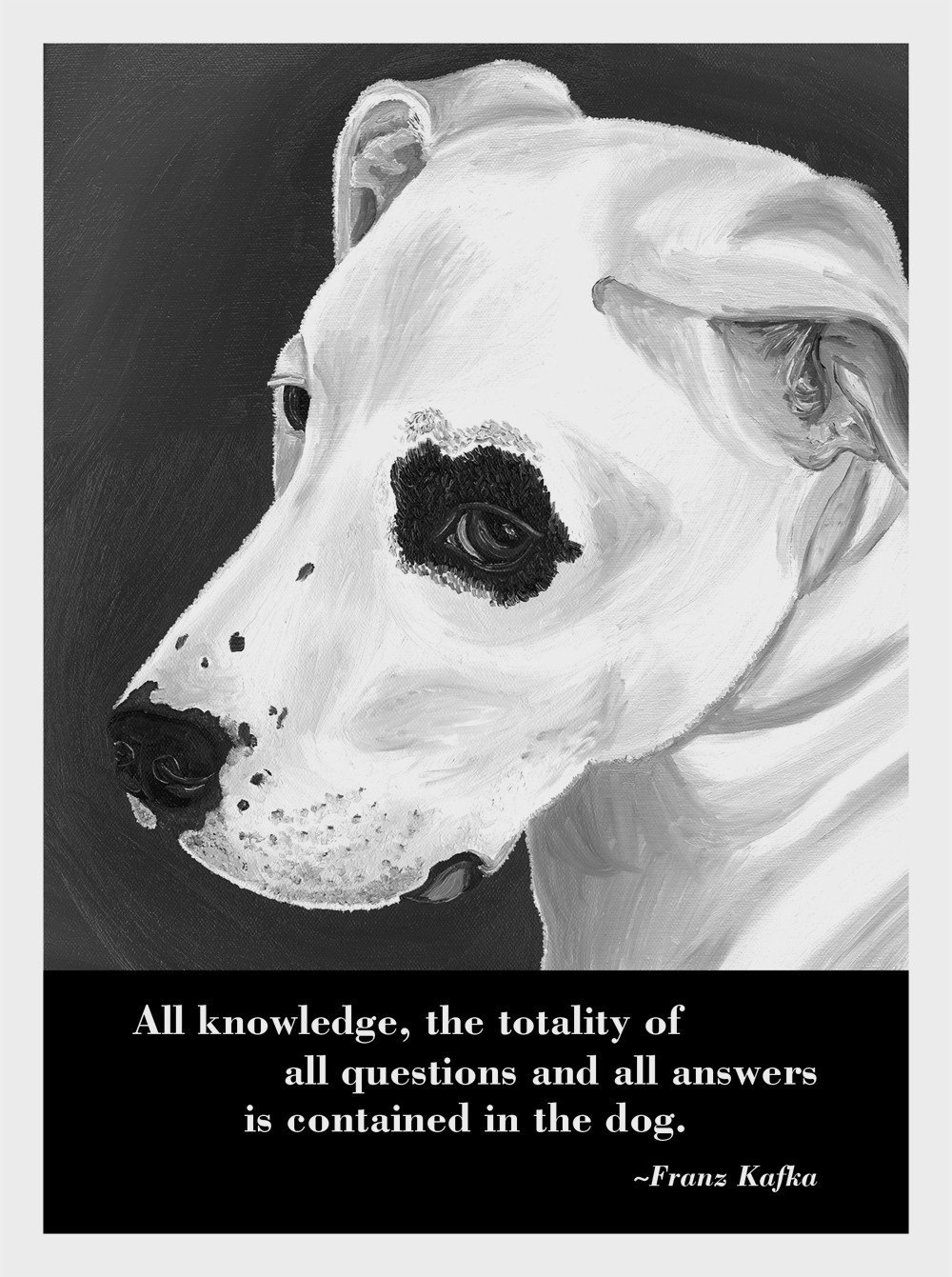
Much of his work has been written about, appraised, scrutinised, criticised, re-appraised, filed, stamped, indexed and numbered! Perhaps not numbered. Be it The Trial, Metamorphosis, The Penal Colony, The Hunger Artist and The Castle, Kafka's works have lasted not only because his literary executer, Max Brod, refused to burn them but because they remain as metaphors for the human condition. But also, despite the density of the structure, text and style, because they are great stories in themselves. They create memorable images that stay with us long after the story, they burrow into our imaginations, exposing and reaffirming our own neurosis, they satirise human behaviour, the cruelty we inflict on ourselves as much as we inflict on others, they mock endless, soul-destroying bureaucracy and at times, especially within the vignettes, the imagery is so absurd that it makes us laugh. (I'm thinking in particular of the short stories 'The Bucket Rider', 'Fellowship' and 'Give it up!')
 
I've recently acquired a new collection of the complete short stories of Franz Kafka. Strangely enough I lost my old copy on a Czech Airlines flight on the return visit to Manchester. My partner had been reading it, and as we disembarked, the book was nowhere to be found. Literally nowhere. Because we spent a few minutes looking, a flight from Saudi Arabia had just landed and we then got stuck in a big queue for about 60 minutes. This alone would have been an adventure for Kafka. While in Prague of course we saw various Kafka monuments and references. The Franz Kafka museum was interesting, weird and had a wrongness about it, which added to the experience.
 
What I want to focus on though, for this feature, is Kafka's own concerns and hyper sentivity in his own words. Kafka's own self-analysis, nature and relationships with others is the key driving force of his writing. You might say that about many authors of course and while this is often a major factor, there is often some distance in the work, it concerns the plight of other people, it makes wider statements about the world in general. Or it's a yarn for yarn's sake. With Kafka, however, even if a character is portrayed as a dung beetle or a mole, it doesn't detract from Kafka having to confront himself, his fears, his flaws, his lack of self-esteem and of the cruel world he's living in.
Here follows some extracts and quotes from an assignment I wrote in 2000. It gives an insight and an overview of Kafka's motivations:
 

After getting a doctorate from the Karl-Ferdinand University in Prague he went into Insurance. A stable job with a stable salary. Kafka found it stuffy, tedious and mind-numbing. It was no coincidence that the atmosphere in the office and the formal approach to paperwork and redtape of his posts were captured in a brutally accurate sense in stories such as The Trial. In the midst of all the tedium of his work he found time to release his tension through his writing, which, on the occasions he found  peace and quiet, he found pleasurable.

23 September 1912 (From his diary)

‘This story, The Judgement I wrote at one sitting during the night of the 22nd-23rd from ten o’clock at night to six o’clock in the morning. I was hardly able to pull my legs out from under the desk they had got so stiff from sitting. The fearful strain and joy, how the story developed before me, as if I were advancing over water...only in this way can writing be done, only with coherence, with such a complete opening out of the body and soul...’


In spite of his job and long hours at his desk at home, he also concedes in his diary on November 1912...in a letter to Felice, his fiancee.


‘My mode of life is devised solely for writing...time is short, my strength is limited, the office is a horror, the apartment is noisy, and if a pleasant, straightforward life is not possible then one must try to wriggle through by subtle maneuvers.’

‘My life consists, and basically always has consisted, of attempts at writing, mostly unsuccessful.’


Kafka would write all through the night with barely two hours sleep before he was back at work. 

‘..at 10.30pm (but often not till 11.30) I sit down to write, and I go on, depending on my strength, inclination, and luck, until 1,2 or 3 o’clock-once even till 6 in the morning.’


Sitting at his desk he would note observations and ideas in his Octavo Notebooks, draft letters to his corespondents and work on stories. Kafka himself conjures up this image of this lonely, tortured, misunderstood artist, alienated from society and human affairs only to find temporary solace, sitting in solitude at night by his desk writing. Writing in spite of writing.
           
 ‘... writing means revealing oneself to excess...This is why one can never be alone enough when one writes, why there can never be enough silence around when one writes, why even night is not night enough...I have often thought that the best mode of life for me would be to sit in the innermost room of a spacious locked cellar with my writing things and a lamp. Food would be brought and always put down far away from my room, outside the cellar’s outermost door. The walk to my food, in my dressing gown, through the vaulted cellars, would be my only exercise. I would then return to my table, eat slowly and with deliberation, then start writing again at once. And how I would write! From what depths I would drag it up!’

His stories are more often than not, amid all the philosophical interpretations, concerned with identity and the role of the individual and the objects around them. How they relate to each other, how they interact, the significance of such an interface. If I was forced to commit myself to a significant theme which pervades directly to his own experiences it would be that of identity. Kafka was many roles to many people and not really comfortable in any of them. Was it any wonder that most of his characters like Gregor and Joseph K didn’t know who they were as well?  One of his techniques that give weight to conflict and humiliation in the course of his journey for truth was Kafka’s own personal obsessions. 


29 January 1915 (From Kafka’s diary)
‘Again tried to write, virtually useless. The past two days went early to bed, about ten o’clock, something I haven’t done for a long time now...’

7 February 1915
‘Complete standstill. Unending torments.’

10 February 1915
‘First evening. My neigbour talks for hours with the landlady. Both speak softly...and therefore the worse. My writing, which has been coming along for the past two days is interrupted, who knows for how long a time? Absolute despair. Is it like this in every house? Does such ridiculous and absolutely killing misery await me with every landlady in every city?’

11 February 1915 (Letter to Felice)
‘All I want is peace, but the kind of peace that is beyond people’s understanding. ...no one in any ordinary household needs the kind of peace necessary to me; neither reading, nor studying, nor sleeping, in fact nothing needs the kind of peace I need for writing.’

‘...the urgency with which I long to get out of this room, and out of this world, were equal.’

‘...the lodger (in the next room) coughed twice yesterday, by today it was more often, his cough hurts me more than it hurts him.’

Eventually,

1 March 1915

‘By a great effort , after weeks of preparation and anxiety, gave notice; not entirely with reason.’

For Kafka the torment didn’t end there.


In Metamorphosis Gregor is ashamed and his family are disgusted at his appearance as a Dung Beetle. If Kafka ever felt in his life insignificant and worthless, and felt strong enough to give vent to this problem in his stories and diaries, it wasn’t without reason. Hermann Kafka, was Kafka’s successful, well built and domineering father. He was a heavy influence on some of Kafka’s characters and ideas. As far as Kafka himself was concerned, all of his works were inspired in some way or a reaction against his father.

November 1919 (Letter to his father)

‘The dislike that you naturally and immediately had of my writing was...welcome to me...My writing was all about you...’

In November 1919, Franz Kafka sought to address some of the problems he had with his father in Letter To Father which was posthumously published by Kafka’s best friend, Max Brod. It was one of Kafka’s most autobiographical moments, laying bare his feelings for his father and their relationship and how it influenced the sensitive Kafka as he grew older. The young Kafka couldn’t live up to his father expectations or compete with him financially and physically but he did have his intellectual independence. Kafka resented the ignorance his father had to Kafka’s sensitivity. If Kafka had one retaliation for his father in the course of the letter it was when the subject turned to Kafka’s writing. It was understood that his father never read the letter.

Another aspect of Kafka’s life, that he was critical of, was in human relationships with friends and lovers. Of the little spare time he had, he was an avid reader of his own works and could often be found frequenting cafe’s and literary circles with his best friend Max Brod, reading aloud some of his many works. He was obsessively critical of his own worth as a writer and very little of his literary output was actually published during his own lifetime. Kafka entrusted his literary legacy to Max Brod and asked him to be his literary executor when it became evident that Kafka’s consumption was growing fatal. Brod defied Kafka’s wishes and published a wealth of material from Kafka’s notes and unfinished manuscripts after Kafka’s death, arguing that Kafka’s comments were actually tongue in cheek.

Of Kafka’s relationships with the women in his life they were complex and intense affairs mainly carried out in the privacy of the words on the page. Of the women he was involved with were Felice Bauer (whom he was twice engaged to), Milena Jesenska and Dora Dymant. Arguably the most intense of the three and most frustrating to conduct was his union with Felice. They only actually met a handful of times and most of their correspondence seemed to be misunderstood, apologetic, introspective affairs. They were obsessed with trivial episodes of why they couldn’t be together, why Kafka wasn’t appropriate for her and vice versa. He wrote to her daily, had an obsessive habit for detail and would question her when she was slow in reply. On her part she couldn’t understand his works and he felt put out whenever she cited other local authors whom he felt were generally inferior. If you look at the relationships in some of Kafka’s works between the women and the central character they are often complex affairs,  presenting women in an almost aggressive and intimidating vein.

Kafka expressed awareness of the intended effect of his work. This comment taken from his own diary entry dated 13 December 1914 is perhaps the most poignant example of the underlying message (if there is one) of his works.

13 December 1914
‘...the best things I have written have their basis in this capacity of mine to meet death with contentment. All these fine and very convincing passages always deal with the fact that someone is dying, that it is hard for him to do, that it seems unjust to him, or at least harsh, and the reader is moved by this, or at least he should be.’


Bibliography

The Diaries of Franz Kafka by Max Brod (Ed.) (Penguin, 1978)


Letters To Felice with Kafka’s Other Trial by Elias Canetti by Erich Heller and Jurgen Born (Ed’s) translated by James Stern and Elizabeth Duckworth. (Penguin, 1983)


Letter To Father (Pg. 555) (trans.) Ernst Kaiser and Ethne Wilkins. (Secker and Warburg, 1976)


The Trial (Introduction) by J.P Stern. (Picador, 1988)


16 January 2011

15 January 2011

Woody Allen 1971

I love Woody. Especially those early, funnier films.I'll write more about the man and his films at some point in the near future. For now here's a very interesting interview I found from youtube. It's taken from 1971 not long after he wrapped work on the film Banana's. The interview, split into four parts, is not only piss funny, but reminds us what a genuinely, inventive comedian he is, certainley he was at that point in his life. The interview is also interesting in that it seems to be an unscripted 37 minute jam with Barry Took (some have suggested it's Peter Cook), the absurd answers and on the spot questions, not unlike the 1994 Why Bother? between Chris Morris and Peter Cook. You really get the sense of that the likes of Armando Iannuci and other leftfield comedy writers and performers must be in part influenced by Allen's absurd imagery, the sight gags, the playful language and self-deprecation.
Above all I'm posting it because it's funny.


05 January 2011

Klaus Kinski didn't write this

Hope you like the new basic, design template. This is a blog where I'm nice about things that I like and the things that I think you might like or should like too. There's lots of cool, charming, heart-warming, passionate, funny, sexy and captivating subjects/people/things I want to share with you. Like this:
 

The cups should be tiny really.

Or this:
 
TuneIn Radio
 
My favourite app of the moment. Just 59 pence. I'll review, evalaute and make you laugh sometimes. That's why it's called His Light Materials. If you want cynicism, hate, bitterness and anger go to the other side of my ego, here
 
Oakey doakey! See ya!