20 December 2011

HIS LIGHT REVIEW 2011: in pictures

This is what I've enjoyed this year, among many other things. Hope you have too. If you haven't seen or have 'been to' them, then do check them out. You might like them too. Or not.


15 December 2011

HOOPS


So here I am. Standing against the work top in the kitchen (my eating position). I've just had lunch. A very economical affair but very tasty (cheese on toast). Yes. Satisfying. I feel like going outside and hugging my enemies now, thumping the air around me and wiggling down the street, the way a duck wiggles its tail when getting settled in the water. 

Here's the thing. I love dated cafes. You know the ones. With the milk churns and orange or red plastic chairs. They offer 'all day breakfasts' for about three quid. You often have to struggle to have your voice heard above the staff shouting the completion of the order, the big boiling kettle and the crackling, tinny radio blarring out advertisement, football commentary or pop music dated from 1974-1994. These places, like labour clubs, exist, it seems, outside of time, and yet they adapt, but don't adapt.  Here is a picture of the very first cafe I ever (to my knowledge) went to, some time in the mid 70s, when I was fab, I mean, a toddler. It's called Krumbs cafe. As far as I'm aware it's still going strong. 


Thousands of cafes like this exist. So they should. In an age where hardly anything feels authentic or is authentic anymore, it's not a surprise to find post-modern retro cafes dotted about, usually in arty districts, where for irony's, authenticity's , kitch's sake they will charge £5.20 for a bacon barm, that should easily be barely above a quid. Yep. You'll see 'em. Retro cafes with motorway cafe prices. To be fair the cafe in Manchester's Cafe Pop was reasonably priced and they served a mean sausage sandwich. That was ten years ago though. I was a newly qualified teacher, going through a retro phase. I bought a retro trackie top from Pop Boutique. I find that as I'm getting older the zipped up trackie tops don't work. Especially if you don't have really long legs and arms. You end up looking like a short-arsed Mancunnian drug dealer. But I'm digressing...I'll just wear lots of black, like Giorgio Armani.

These cafes serve food, healthy or not, that actually fills you up and leaves you feeling satisfied. Real food. Not rabbit snacks, served between wood chipped brown bread for four quid. As for the decor, badly lit/ composed framed photographs of sub-Wimpy burgers, milkshakes and chips, not looking at all edible, is the order of the day. In fact I have yet to see a picture of a jacket potatoe with ANY filling that doesn't put me off. And I like jacket potatoes. 

Thing is, I wouldn't mind me own caff. I want to have the freedom, guilt-free, to serve unhealthy food that, god, is like an orgasm for the taste buds. I'm not concerned about the high fat, salt and sugar content.  It's fairly obvious to anyone with enough brain cells that this cafe won't promote healthy eating or lifestyle. You don't have to go there everyday for all of your meals.  Anyway I could have one which has two floors. The upstairs version of the cafe would be like the healthier version, as if the greasy spoon original downstairs had been remixed by Heston Blumenthal, like he did with Little Chef. I want my menu to look like this:


But it also serves cheese on toast, egg on toast, spaghetti hoops on toast and many other things on toast. It must serve vimto as well, hot vimto and bovril in the winter.  My cafe will be called Hoops.  I suppose it would all seem very post-modern and knowing, especially if I promote the menu of the day on twitter and set up a Facebook group, inviting you to 'like' it', and sell things like Soda stream soft drinks, Mr Kipling cakes, Sara Lee gateaus. Maybe it'll have a kiosk, a kind of tuck shop that serves Golden Wonder crisps, boiled gob stoppers like Jawbreakers and popping candy. I don't know. 

Anyway, best thing to do, to avoid the accusation that Hoops isn't authentic enough, because it's too retro is to actually go back in time. Come on then. Step into my time machine. 


Hold tight! Ready? Whiiizzzeeeeee! 

Okay. We've arrived in 1984. Now I can open my own cafe without being knowing and post-modern. There will be some obstacles I'll have to overcome first, such as the paradox of two versions of me co-existing in the same time. Right. Let's do it. I'm not going to have my cafe's radio tuned to medium wave Radio 1, with the tinny sounds of Gary Davies, Peter Powell and Simon Bates waffling on about what they did over the weekend, how they spent their wages and who they bumped into over a backdrop of Nik Kershaw, Black Lace and Strawberry Switchblade. I'll have that new fangled MTV beamed in, if I can afford a satellite dish. Yep. Non-stop, cutting edge music video. This is the future. 

Right. Let's do some market research. We'll step into that old cafe in Library Street, Wigan. Plastic chairs? Check. Milk churner? Check. Smoking policy? Check. (cough) Naff framed portraits of strawberry sundaes? Check. Oh look! They sell egg and chips here for 45p! Shall we have some? 'Egg and chips, twice, please!', 'Sorry? But it is real money!' Let's just go back. No point in going to my bank in 1984. I only have about £3.50 in my account. I know that could get us egg and chips twice, a couple of milkshakes and leave us with enough money to get ten Benson and Hedges between us, but that isn't the point. We'll go back to the future and start again. Whhheezzzzeeee!
Yeah.


09 December 2011

LATE NIGHT TALES FROM DECEMBER

Here is a mix tape I've compiled which is suitable for cold December nights. If you have Spotify please click on the link below the track list.

Tracks.

1. Kavinsky-Nightcall
2. Charlie-Spacer woman
3. Imagination-Just an illusion (dub remix)
4. Anton Romezz- Sunshine in Karelia (Havana Candy remix)
5. Games-Shadows in bloom
6. Clint Mansell- Are you receiving?
7. Glass Candy- Digital Versicolor
8. David Lynch- Good day today
9. Johnny L-Ooh I like it
10. Mantra- Intensify (I love you)
11. Zomby-Ecstasy versions
12. The Field- Everybody's got to learn sometime
13. John Maus- Cop killer
14. Space-Magic fly
15. Rondo Veneziano- La serenissima
16. Laurie Anderson-O Superman
17. Japan- Ghosts
18. Godley and Creme- Under your thumb
19. Soft Cell-Bedsitter (Extended version)
20. Jon and Vangelis- State of independence
21. Elton John-Song for Guy


You will find your mix tape here. Thank you for listening.

06 December 2011

HOW TO SAVE THE RECORDING INDUSTRY PART 4: Conclusions


I love music. Most of the time. I love pop music, classical music, music made with vocal chords, music made with electricity, music created with ancient instruments, music hardly made...music you can mime to, you can dance to, can cry to and can take you to places you've never been or haven't been to for a long time. Music, as a time machine.  Even when I hate music, I love hating it, be it the Mercury Music Prize's annual masturbation ceremony to the tabloid media's (i.e. the N.M.E) Oasis soap opera. I love 'not getting' whichever sub-genre of dubstep is popular this week. I love being snobby and being shameless about music that's naff. There's love everywhere. Passion as well. Not everyone has it. I love how this record excites me, for example...


And this was what this series has been about essentially. Passion. Optimism. Wanting the best for music, cherishing how it makes us feel and not allowing the future to fuck it up.  In this final episode I will share a few of my passions with you, since this series is really about music, and I'll try and conclude on what could/should be done to save and refine the industry. It may be gullible of me, and I don't have figures and statistics to back me up. I leave that to those who do but...it can work. Here's another record for you. I don't listen to these guys enough. When I do, this is one favourite.


I started this series just wanting to express, in my own pompous, obnoxious way, what was on my mind, what was worrying me about it, what I did or didn't understand. It couldn't have been me just getting old and bitter, could it? What else was happening? Was there a drop in quality? Were sales so bad? Why? File-sharing alone can't have contributed to popular culture's devaluation of music could it? I understand that quality is subjective but a casual look at The Top Tens of the past decades really tells you a lot about our culture, history and, I guess, our technology and future. So I wanted to assess, at least try and assess, what else was going on. To be honest I haven't researched the shit out of these areas beyond engaging in forum debate, reading the odd newspaper/online article and deciding some of it made sense and some of it sounded like bullshit.   So, over the course of my feature what conclusions have I reached or rather, what solutions do I have? Answers following the next record...


SOME PROPOSALS

1. INVESTMENT

More investment is needed in retail outlets that sell recorded music, especially independent record shops. Record 'store' Day, or whatever it's called shouldn't just be a one day event every year. More record companies and artists should promote and support more independent record shop only releases, or put one format of their music out at every indie venue (if they haven't already). Hell, can't even concert venues, if they have the room, carve out a mini record shop selling CD's, vinyls and exclusives of the acts that are playing, that they book, etc?  If music venues are struggling, let's invest in them as well. Open its doors every night to give opportunities to artists who don't have hype or promoters behind them. 'Merch' stalls are all very well but they can be a bit disappointing and over-expensive. Venues support artists, artists support venues. Invest in manufacturing record players, music playing devices. Don't assume Apple has the monopoly. 'Um...gee, where will this investment come from, Smirnov?' Well in the short term it can come from anywhere, rich people, rich artists, big and small record companies, businesses, the BBC (who we pay for) and many sectors. Then the funding will eventually come from the consumers. But the support must come from...

2. THE MEDIA/QUALITY/VALUE

Music does sell. Many artists have lucrative careers. The music itself isn't necessarily genre-defying, innovative stuff. It's quite banal mostly but, but, it is supported by the media. It's promoted. It's used for trailers, put onto playlists and has programmes/features dedicated to its artists. Most of them are rubbish of course but the records and downloads sell millions. I often wonder why, for example Radio 1 or ITV don't focus their energies and resources on promoting not just more forward-thinking music but the culture and passion of music consumption. As it stands Radio 1 seems to exist to feed and manufacture the frenzy for US-lead processed Guetta/Pitbull/sub-N-Dubz-Black Eyes Peas shite and pander to X Factor banality, under the guise of railing against it...seemingly at the expense of better things. Seriously if you had a choice would you play Black Eyed Peas or say...this...


You might be clever and say, 'hmm why not both?' Radio 1/X-Factor apologists/young producer/ probably say 'We give people what they want!' To both observations- bollocks. You don't have to play both records. Just play and promote music that doesn't sound like it's made for the brainless, and actually means something. You decide what the public want. You always did. You more or less make and break careers. Choices! You don't have to be cheap and easy. It's no less cheaper or easier to support quality in music and to enhance its value. The public has lost respect for music because, it appears, the media has. If the media isn't promoting banal or piss poor voices it's like a Primrose Hill style column. You can't win! Let's just let Jools Holland have it. His show Later... seems to have the right balance. It isn't boring and it isn't cool.

In my fantasy Radio 1 would be taken over by BBC 6 music. Radio 1 would exist in a CBeebies type of netherworld playing stuff for tots and mentally challenged adults, while 6 Music (now called Radio 1), once you've shaved and toned down a few guest presenters (No names, Guy), would slowy introduce Captain Beefheart, Aphex Twin, Rustie, Fucked Up, Fuck Buttons, Aeroplane and The Advisory Circle into its daytime slots/playlists. There'd be no reason for this boring stuff like 'Get Nirvana' to No.1 every bloody year as Erik Satie or Can would be sitting pretty. In my dream, by law, the major television channels would have a dedicated show which wasn't geared towards making money from stupid phone-in votes. They would take the novel step of actually promoting and supporting new music/music videos and eventually, I hope, record and CD manufacturers would spring up everywhere. The industry would feel valued again. Everyone would have self-respect. Even single artwork would look beautiful or suitable and not be a token of 'will this do?' cheap and smug, generic vomit. We'd have a society that would no longer grow up being influenced to make music that sounds like a soundtrack to updating your Facebook status. Phew! Here's another record...


3. CUT THIS SHIT! STOP THE HYPE! PLEASE STOP!

There is another challenge as well. There's too many artists like 'King Krule' or 'Totally Enormous Extinct Dinosaurs' being hyped by the hipster press as radical, new voices, blah blah when they really aren't. I'm not suggesting that they shouldn't get support or airplay but the idea of hype is that often if the stuff being hyped really doesn't cross over or if it isn't much cop, or if it does cross over for a while before people drop it like a brick, it just makes those who have done the hyping lose credibility, thus devaluing music, taking respect out of it. There's a difference between hype and championing something you enjoy. In rare cases the hype may be justified but usually it isn't really. It really isn't. The sensible artists will ignore the hype. The daft ones will believe in it, and feel that they don't have to make so much of an effort, and then they'll fail to live up to the hype or have any longevity. You really can't win. No-one wins. It's fucked up.

The BBC Sound of...series is another example. It's essentially not about new artists. It's self-serving. It's about generating more listeners in the belief that they are serving the public interest. It's bollocks. Who takes it seriously, apart from Jessie J!? Always be suspicious about the term 'tastemakers'. It's bullshit. Yeah, some people have influence but do they have taste? Or class? I recall an interview with Talvin Singh, a couple of years after he won the Mercury Music Prize. He referred to himself as a tastemaker. He came across as deluded and a lonely figure. I have no idea what he's doing now or what he's influenced.  So trust your audience. You can't refine them, not really. You can educate them and inform them but telling them how 'cool' something is won't help anyone. Music isn't about being 'cool', no matter what advertisers will claim. It's about beats. Emotions. Meaning. But beats. Hype is not only demoralising but it's damaging.  Now another record...


4. RESPECT AND CULTURE

We have to value recorded music again. We lost respect somewhere down the line , partly because of the shit pushed onto us but also because we were told it was our fault that the industry is dying. Music feels more about being a soundtrack to fast food restaurants or whisky drinks. It's not a lifestyle. We need to rediscover the passion and romance one used to get going through the ritual of buying a record at an actual record shop, to taking it out of its sleeve and dropping it on the turntable. We have to learn to swoon again at sexy record players. And records, of course, and CD's and even high quality, high bitrate mp3's. But you don't get quite the same pleasure unpacking a .rare file as you do slipping 5" plastic into the CD tray or dropping 12"'s onto the slip mat. (Sorry, I don't mean to sound like a dick.) Let's listen to some more music and I'll elaborate a little.


It's no good now moaning about how it felt to buy the cassette of Tango In The Night by Fleetwood Mac or Very/Relentless  by Pet Shop Boys, without prior listening, having only read about the releases in the Melody Maker/Record Mirror/Smash Hits, or looking at the artwork and track-listing, imagining what it will sound like. The anticipation. No point now. But it would be great to get back to that. These feelings of anticipation really do seem to add value and respect to the music.  Finally...

5. THE FUTURE

The pop single, or the album as a whole, are kind of limited concepts now. It's cheaper to push digital downloads. It saves manufacturing costs as well. They might not actually sell much but it doesn't matter. To the mindset of the industry and subscription based models like Spotify (who are looking at things in the long term) it's all good. Bands and artists have a need to make music. Most know it won't sell anything or even get many plays. For some artists it isn't about the music but being 'hip'. Maybe singles and albums will disappear in twenty years, maybe another variation of the EP (Extended Play) record will evolve. Who knows? The industry isn't sustainable. Will music be owned or subscribed to? Will the same thing happen between Blu-Ray and a high definition digital alternative? Will everything be inside a cloud? For industry, it all depends what is the cheapest thing to sell and promote, which is why we could still make the recording industry last longer if we offer the above alternatives. It doesn't have to be cheap and devalued. If people used to buy music in their multi-millions and are capable of still doing so, there's no reason why we can't accept many other options. There's no reason why we have to compromise on quality. Imagination and quality costs nothing. So far. Let's have another video. And I'll wrap this series up...


And what of the music itself? Will there be strange new genres, like Crabstep or BugCore? DogRock? In 1975 Kraftwerk were the future of music but, you know, it still goes through fads...only the 80s fad is lasting longer than the 70s fad in the 90s. I'm not looking forward to the late 90s/early 2000s fad. Especially if it goes on for thirty years. There's a fad now for reforming of course. It probably forms part of the manifesto for new bands. 1. Form a band. 2. Release an album. 3. Split up. 4. Reform/tour. The internet has been a good playground however for discovering popular music from different cultures/time periods, for opening up old genres to new audiences, often obscure genres like library music. Perhaps the 'new' thing will be to be like composers of old. Music isn't 'officially' recorded and released but performed, maybe sold as sheet music. As we are told that the live circuit flourishes, perhaps music as a recorded medium will become so redundant, as it's replaced by unique performances. After all there'll come a time where people won't have the time to wade through everything new. Would this be a good thing or a bad thing? Or would we be saved from this from record shops of the future?

And what of policing the internet, making sure people pay for music? You know. It can be done. I've said before that people can be employed to visit torrents and file-sharing websites/services and take down illegal files. The question is, is the music still of good enough quality that people would want to buy it, if they can't get it for free? Or is this a cultural issue that can be ironed out? We'll see.

Thank you for reading, and for those who have been following these pieces. I'll leave you with a classic.

23 November 2011

HOW TO SAVE THE RECORDING INDUSTRY PART 3: Media and Society


In part's 1 and 2 I looked at how modern culture, business and technology had affected the recording industry. I fantasised about how record shops and independent record shops could be allowed to exist in a world where they could flourish. I assessed the impact that file-sharing had on the music industry and to what extent the lack of quality in modern music over the decades might have played a part in how pop music is currently defined and its declining sales. These pieces are written from the vantage point of a music 'fan', hence the off the cuff nature and style. So apologies if the structure is loose and free. This is just my take on the climate. What I find when I looked deeply into these areas and what people are discussing on the forums and the various debates still going on is that the decline is not merely down to one thing. The discussion and debate moreover, in recent years, has been about how the recording industry will evolve and what business models would support it. (More below) What this means culturally still remains to be seen.

In this part I will look a bit more broadly on how music is accessed and broadcast and how it has 'evolved'.

As we know in the olden days you had record shops, radio stations, magazines,clubs, concerts, sheet music, friends made you mixtapes and television even had shows dedicated to showcasing new music. Style played a small role in it but you felt music wasn't a side order to lift muzak, to a brand/sub-culture/fashion iconography, or aspirational product. Indeed we still have the above outlets but they really are so few and far between in terms of volume, quality and accessibility. We do, we are often told by people on the radio and in the handful of music magazines that are actually available, have a vibrant live music culture. There are more festivals than ever, more in store performances, more concerts, tours and gigs. Of course there would be. Artists aren't making money from their records. We know this. There are practically millions of online radio stations as well, the most well known, 'user generated' one being Last FM.  Maybe you, the reader have your own Last FM station. In fact since the internet became the beast it is, everyone can indeed be famous for 15 minutes or famous for life thanks to social networking.

If you're a listener , musician and consumer there are of course numerous resources available to you. As with everything else this can be a good thing, depending how much or little research/effort you want to put into it. You can either sit back and allow iTunes/Amazon and Spotify to recommend new music to you (their bots aren't as complex as your or I...yet) or you can do some further reading, chatting to others groundwork yourself and make your own discoveries. Let's have a look at some of them.

Myspace

Myspace is a waste of space. In Myspace no-one can hear you scream. It was one of the main social networking sites in its day (its day being about seven years ago). Have a look at it now. Looks a fucking mess. Its filled with crap. Its homepage is splattered with glossy-looking-airbrushed band pics and commercial artists. In fact its one big commercial. Of course it was always about selling adverts to you but now it doesn't even try and pretend to give you a space for you to connect to others, upload your music and actually make friends. The 'making new friends' thing is the biggest myth about social networks. It was supposed to be a space where if you were a band/artist you could post updates, accept friend requests, make requests and upload your new music. The flaw of course was us. Partly. Us and Information. Us, Information and Them, Myspace.  It's the same today but even worse. You see in an era where we can communicate through multiple channels to multiple audiences, we are still engaged in one way communication. No-one wants to listen because they haven't got time, haven't made time and don't care anyway because they are the only interested receiver of their own message. But generally, they don't care. With information, bulletins and status updates, you tend to gloss over them. This is the flaw with most 'user-generated content'. Mypsace has also become less user friendly to use which is part of the reason people have abandoned it in droves.You haven't got time to care or make an emotional investment. Social networking is in effect Anti-Social Networking. As you may discover from similar models unless you have a PR/marketing machine behind you, your creative efforts are left drowning in an ocean of information. Myspace played its role in fragmenting the audience further than satellite/subscription based television. Why bother having a circle of friends or a community when, along with Friends Reunited and, later, Facebook, you could just keep everyone and everything at arms length, while idealising your life?

Soundcloud

As with Bandcamp Soundcloud allows you to some extent promote and sell your work as well as discovering new music. Now in the main these websites are okay if you want an outlet to express yourself, as long as you don't take it too seriously. They also include things like stats and trends, which try to make you believe that you are a one person focus group who can shape and refine your audience. The claim is that somehow they are giving control back to you and you can take or leave the information about which tracks you've uploaded or are popular in certain territories, but if you're original or see yourself as original you will do what you like anyway. It won't bring you mass success or make you tons of money but at least you won't sound like millions of other artists. Originality. Difficult. Bandcamp and Souncloud don't nurture you really. You kind of have to rely on your friends to post constructive feedback (if you get any feedback at all, beyond 'cool', 'crap', 'come to Athens!') What you really need, what most artists probably need is a small community and group hug of a record company that can help you refine your sound, put you in touch with the contacts who will really make a difference and evolve your career. Of course Soundcloud isn't a record company, so going alone can be very lonely. You can sell your music on here as well but no-one will buy it because 1. they won't know you exist and 2. they could get it for free. Even if you made it available for free, you'll be lucky if anyone listens to it, so you have to spam everyone relentlessly.

However I have and you can still discover music that you wouldn't generally hear on Radio 1, Radio 2, classic FM or BBC 6 music if you look for certain niches, based on your own personal sensibilities, whatever that means these days. Soundcloud features a user friendly interface and allows easy sharing to other social networks. Whether anyone has the time or inclination to listen to a link you post is, as ever, another matter altogether.

The Hype Machine

This is actually a very popular music blog aggregator that features music posted on peoples blogs, often record company leaks and promos. It's probably less random than it used to be but I've made many a discovery on here in the past and is one of my first port of calls when I'm looking for something different or fancy checking out some more information about an artist who pricked my ears up. Essentially it does the job that big radio stations should be doing all the time, instead of pandering to mediocre records and artists. However as its name implies, it does present the risk of hyping inexplicable trendy acts like King Krule as well, so you have to read/listen between the lines.

Facebook/Twitter/Tumblr

I haven't put a link to these websites because you'll probably have one of them as your homepage. I'm not being bitchy, just practical. These are of course outlets for new music as well, usually promoted by artists and record companies themselves in the forms of links, status updates, etc. Whether you're positing a Youtube link to S'Express performing 'Hey Music Lover' on Top Of The Pops on your Facebook page or breaking the new EP by James Blake, these outlets offer the opportunity at least to express your tastes and provoke limited discussion or approval. With Facebook it's the 'Like' tab. There should be, for democracy sake, a 'hate' tab too but Facebook isn't actually a democracy. Adam Curtis, broadcaster and author of 'The Power of Nightmares' said as much.

'People have a simplified view of the world...Systems that purport to be open and free... are ways of shutting debate down. They're self-policing...On the internet we monitor the choices of others to see if they think like us, maybe we seek to...make them conform.' Extracts from this interview given in 2007

Pitchfork

Online music-based magazine. Not bad but you feel at times as if it's an extension of the Tumblr hipster community, where new music is made by and for (produced on cassettes 'cos they're cool, fuckyeah) themselves. That said there are some great recommendations and a passion for music which, like many recent-ish music websites, is manifested in the features, interviews and reviews which moribund publications like the N.M.E used to pride themselves on. There's always something to discover and check out. The UK-based Drowned In Sound is another one as well and there are others. I like The Quietus which is a bit broader than the others in terms of its features and feels more honest in its approach to articles, reviews and write ups on those who are seen as 'coll' or as cutting edge as they once were or never were.  However there is a lack of certain genres featured in these online publications, which feel as if they are more aimed at the 'indie' market rather than anything wider.

It's looking a bit dense, this feature, so here's a picture of Chicago housemaster, Darryl Pandy, before I continue...


Spotify were in the news recently. I followed this story last week and then got lost in the debate about Ownership models vs Subscription models and how Spotify were at least trying to make the industry evolve just as much as iTunes were, blah, blah. I read lots of debates and forum arguments over this one and was lost in stats, and cultural ideas about what consumers and audiences of the future would feel about owning actual physical products when there would be a lack of space, emotional connection to plastic, etc. Personally all I get from Spotify is that so far (unless someone can suggest a better way) I only use it to share certain playlists/mixtapes with anyone who visits my blogs, follows me. I can organise the tracks based on the music I already own at home and have myself in iTunes. I have the free version of Spotify. I don't want to pay a tenner a month. I own a lot of music as it is. I get round the annoying adverts by skipping the track before it finishes. But since I'm only using it to arrange playlists occasionally, I don't really have a need for Spotify. As soon as iTunes offers the ability to share owned/uploaded music/playlists, I will be able to delete Spotify.

Since Spotify doesn't seem to offer much to artists it appears that record companies/artists won't support it as well.

iTunes

I would have loved this when I was younger, even more than I do now. I have CD's and loads of records, and I hope I always will because they are important for many reasons, the most important aspect being sound quality. Now iTunes and Spotify are not there in terms of sound quality but it's still an improvement on the ropey compressed sound of my cassettes and cheap stylus of that cheap plastic boxed 'Midi' system in the 1980s. It used to take ages organising my 12" singles, b-sides, album tracks and artist/themed compilations onto blank tapes for train or bus rides to school, college and work. I'd have loved my own stylish jukebox, that I could, accessed via the computer, connect to a decent sound system. This was before I bought an iPod.  For better or worse iTunes Music Store recognised the market for digital music and did what Napster failed to do and what many record companies failed to do at the turn of the century.

Forums


This can be fan forums or general music forums. In an old fashion sense, word of mouth is the best way to check out new music or old, lost classics.

So these are some of the outlets that we have, maybe they are part of the legacy of the recording industry's decline, I don't know, but as ever, they are always going to be at risk from homgenisation, cynics and marketeers squeezing every drop of orginality and creativity out of them to sell us something that we don't care about or want. As ever, it really is up to us to make sure that popular music and culture is valued and not a mere status update, aural wallpaper for tweens, or a imbecilic trending topic.

In the final part I will conclude by summarising Part 1, 2 and 3 and looking into what the future could have in store for the recording industry, but also what it will probably involve.


15 November 2011

HOW TO SAVE THE RECORDING INDUSTRY PART 2: Business, Technology and Culture

At a recent lecture, the John Peel Lecture as it happens, Pete Townsend reckoned that Apple should be leading the field in nurturing talent and new music. It's actually an interesting lecture and does delve into some of the areas that I've been thinking about, and you should all click the link and look at it, but, breaking news, Peter...Apple is only a retailer. Sure they are influential and iconic, and I'm sure if they formed a record company it would probably be the best in the world, if, perhaps, rather bland and commercial. Not sure John Peel would be comfortable with Apple employing A&R workers to discover new talent. You just feel we'd get less stuff like The Field or the Fuck Buttons and get the kind of inoffensive Acoustica that crops up in the final montage in any given episode of House, Grey's Anatomy or Brothers and Sisters. At least that's my view. Try asking Andy's Records (yes, I realise they are no more) or even HMV to shape the musical landscape as well as struggling to flog CD's. I can see what Townsend is getting at however. Something has to happen.


In a way, unless you're the type who just accepts whatever radio or X-Factor television serves up, many of us have had to become mini-John Peels, searching the internet and forums for new music, making our own discoveries or checking out things that have been recommended to us, even, in some respects re-discovering rare genres and imported music in times gone by. In the last few years, months, weeks and days, because of music forums, social networking sites, youtube and word of mouth I have found so much new and obscure music and re-discovered my love of Italo disco, works from early pioneers of electronic music and even this fascinating thing about sound in 1930s Soviet Cinema.. I can't image Apple introducing me or anyone to this. To be fair there are occasional radio shows which showcase the more obscure and new stuff, such as 6Music's  Freakzone. This was where I was introduced to the Ghost Box label and The Advisory Circle.

The point is, well there's a couple of points actually. A lot of material isn't even properly available and packaged, so people, when discovering new, old or obscure music can't do anything other than to 'illegally' download it, unless of course they do nothing and don't want to listen to anything else. This example is hardly the same as going to Guy Hands and punching him in the face and stealing his wallet. There are so many records that are rare/out of print that would inspire many new generations of listeners and musicians today. The other point is... well finding a business model that is workable and suits its market, its product and its audience. Apple wouldn't necessarily fill the void of John Peel if they went into the music business as 'tastemakers'. They just wouldn't. I can tell you now the same is true in book publishing. Any company that wants to make as much money as possible won't invest in something that won't sell. In other words they are not arsed promoting a product that is harder to sell, that has niche appeal. They want something that is cheap to produce and easy to palm onto the public.Despite this, despite illegal downloading affecting the market, they will still shift millions of units and make shit loads of money and do deals with other sponsors, investors, etc. If you're a niche/indie act however, unless you have a mummy or daddy who can fund things for you, set up your own label/shop, it's more of a struggle.


GhostBox records is one such niche which, while not setting the music industry on fire or making millions, has a strong brand identity and is able to pay for itself. If anything, like Kompakt records and Warp before it, its appeal is growing and the business is evolving, with new and more diverse releases as time goes on. It also helps if the music has something going for it, which it does. Such record companies are also able to support independent record shops, I talked about in Part 1, with exclusive vinyl releases. This makes sense. It could go further if it isn't already. Companies like these make their records exclusive to indie record shops, shops promote them, sell them and maybe even work with the labels for record signing events, gigs and other forms of promotion. At least you have people involved who know what the business is, what the music is about and who are best placed to promote it. Now if we had this on a grander scale, e.g. more and more small labels with strong and stylish brand identities, interesting artists, supporting and being supported by independent record shops, we could , if we haven't already, business models which at the very least, pay for themselves, certainly at the start. Perhaps I'm naive and this has already been tried, tested and failed. I don't know. My fantasy does require this to happen, so that record shops will be everywhere and manufacturers will make turntables and vinyls and everyone will care about sound, image and presentation. You see the losing battle isn't file sharers as such. People have been sharing music for about 50 years, perhaps longer. It's more cultural. We have to value popular and obscure music. We have to respect it. It's easy to see how we have no respect when you listen to adverts, see how popular music is bastardised on television and talent shows, or how big recording companies put out watered down classical/opera music every Christmas, homogenise the latest London fad, how the music press is just full of air-headed hipsters who are more passionate about Harry Potter than they are about the latest album by Diskjokke.  Christ, the NME might as well be called Noel Music Express as the news is nothing more than banal soundbites, often from Noel Gallagher.  I suppose what this also amounts to is the fall in quality in some respects, lack of eclecticism. Music generally is more sanitised ans Americanised. Don't believe me. Okay then. Let's have a look at the charts from this week in 1981,1991, 2001 and 2011. Deal?

1981
1. The Police-Everything She Does is magic
2. Altered Images-Happy birthday
3. Four Tops-When she was my girl
4. Squeeze-Labelled with love
5. OMD-Joan of arc
6. Dave Stewart with Barbara Gaskin-It's my party
7. Julio Iglesias-Begin the beguine
8. Queen and David Bowie-Under pressure
9. Rod Stewart- Tonight I'm yours
10. Olivia Newton John-Physical


1991

1. Vic Reeves and the Wonderstuff-Dizzy
2. 2 Unlimited-Get ready for this
3. K-Klass-Rhythm is a mystery
4. Kylie Minogue-If you were with me now
5. U2-The fly
6. Bryan Adams-Everything I do
7. Kiri Te Kanawa- World in union
8. The Bassheads-Is there anybody out there?
9. Genesis-No son of mine
10. The J.A.M.M.S-It's grim up north


2001
1. Westlife-Queen of my heart
2. Afroman-Because I got high
3. So solid crew-They don't know
4. Alicia Keys-Fallin'
5. Iio-Rapture
6. Artists Against Aids Worldwide-What's going on?
7. Jennifer Lopez feat. Ja Rule-I'm real
8. Cher-Music's no good without you
9. DJ Otzi- Hey baby
10. Dandy Warholds- Bohemian like you


2011

1. Professor Green feat. Emeli Sande-Read all about it
2. Rihanna feat. Calvin Harris-We found love
3. Labrinth feat. Tinie Tempah-Earthquake
4. Cher Lloyd feat. Mike Posner- When UR love
5. Maroon 5 feat. Christina Aguilera- Moves like Jagger
6. Ed Sheeran-Lego house
7. LMFAO-sexy and I know it
8. Charlene Soraia- Wherever you will go
9. Kelly Clarkson-Mr know it all
10. David Guetta feat. Usher- Without You


The proof is there. Black and white. Quality control. What's with everyone featuring someone all of a sudden? Even the duet or unusual duet has been debased.

Of course I don't want to downplay file-sharing and the impact it has had on the industry. People like U2 and Radiohead won't suffer as much as new artists, who already don't get promotion and investment from most record companies and can't even gig if they can't afford it. For new artists the industry is by and large a middle class persons game now. You just couldn't afford to gig all over the place otherwise. However I think it's a step too far when certain artists go on about file-sharing as theft. This view doesn't change the culture. In fact it makes music fans more determined to break the rules if some millionaire like Lily Allen tells you that you're a thief. I've spoke about this at length here. You'll actually find a few more suggestions on how you might save the industry there too, as well, as a nice picture of Lily.

I've been ranting on a bit here and I think there's one more part left, where I'll try and conclude and tie summarise things. Until then. Check out the links in this feature kids and learn more. 

28 October 2011

HOW TO SAVE THE RECORDING INDUSTRY PART 1: Record Shops


The recording industry will continue its slow decline for a few more decades yet. Music will exist to be archived, enjoyed, studied, mashed-up, dipped into, lauded, hated, remixed, repackaged, uploaded, downloaded and recorded. It'll survive somehow, if anything, if only by unconventional means. Probably.
I'm not an industry insider or an A&R person (although I feel I might as well be an A&R person, because I rarely make new discoveries from anything on the radio these days but by trawling blogs; services like Soundcloud,  Youtube, Last FM and anything else out there). My qualifications might be the same as yours. I'm a music lover, frustrated pop star and in theory an 'audiophile'. It's not nostalgia that's driving this piece but the present reality. Ironically this next section will begin with me placing my fingers in my ears and not so much as humming but fantasising.

Origami Vinyl, LA
I have many fantasies. This is one of them.
There are record shops everywhere.  As many as coffee shops (actually they could sell coffee too and tea). I would prefer if most of them were independent. Independent record shops each have their own identity, specialism subject, niche, whatever. They are little worlds you can get lost in. Lost in music, if you will.  They are record shops though. Which means they sell vinyl. Lots of them. They can still sell music on compact disc/mp3/cassettes, and mini-discs if they like. The emphasis should be on the pieces of plastic we also call 'records.'

In my fantasy (and in reality as it happens) vinyl is a luxury item. Not so much in terms of price per album/single but the whole idea and ritual from the packaging, purchasing to playing. However they will all be available in all these record shops which happen to be everywhere. In these record shops (which I hope are also very stylish and welcoming, designed to reflect ease of use, as well as looking quite fab, perhaps with milky, chocolate, coffee colours, and wooden panels) I want record players to be on sale. Maybe like the one above, but some affordable one's as well. I want them, along with the vinyls and compact discs, to be sold by staff who are friendly and not intimidating. They can have a personality, of course, but it's my fantasy and I don't want my shopping experience affected by someone who scowls and sniffs just because I happen to enjoy 'Martha, my dear' by The Beatles. Here's another picture of a stylish turntable.

I want decent record players, turntables, amps and speakers to be on sale. In my fantasy there will be demand and manufacturers will meet this demand because people are buying them, because they have been publicised and there are places to buy them, people who appreciate good sound quality and because, well, it's my fantasy and in my fantasy record buyers will treat music as a luxurious pastime, not something that's half-heartedly being piped into supermarkets. Consumers care about romance, packaging, presentation, supporting independent shops, the anticipation of the release date, going out to look for the album, seeing it on display, maybe hearing it being played in the shop, the journey home, taking the record out of the sleeve and carefully placing it onto the slip mat...turning the lights down...and hearing the sound of your favourite band/classic album pouring out of the speakers.

Seattle, 1944
My record shops will see the return of listening booths. You will be able to browse or have a coffee, read the wide range of music magazines and papers that will exist (as in my fantasy they won't fold because they'll be written by actual music fans that will engage young people as well, and not just exist as style/tabloid fodder like the N.M.E.). You could order a new sound system. There will be some on display although you may have to order one, safe in the knowledge that our experts will deliver, assemble and give you advice on caring for your new product. Record players will be held in such high esteem that buying one and inviting people over to listen to music would be similar to buying a television in 1953. They really should be small works of art, something that enhances your living space.


In this climate (my fantasy, and some small sections of reality) people care about the sound quality in music. They've grown tired/deaf  from compressed music, low bitrate, tinny, shitty, low quality mp3's that screech out of mobile phones, cheap speakers in clothes shops, hammered into your face in bars, pissed out of computer speakers and Christ knows what. Our customers are tired of remastered albums where the sound engineers, to compete with other bands and artists, just actually whack up the master track, rather than enhance, restore, preserve the space and dynamic range in each of the multi-tracks. In my fantasy world, my products will not be refugees of the Loudness War

In addition, in the UK we have a day once a year where some of our artists, in support of independent record shops, release limited edition vinyls. It's called 'Record Store Day' or something like that, although it should be known as 'Record Shop Day'. Anyway, it does quite well, gets a lot of support from the music press and radio. Now why can't it be like that every week? Better still why don't artists just make their stuff available (at least on one format) exclusively at record shops? Let the supermarkets sell pap. (Of course I know the answers. It's money, money, money) Still...

In Part 2, I'll look at Technology and Culture of the recording industry. 

12 September 2011

The Midnight Sun


Yes, I know. I'm going to say something along the lines of 'This is good. This is why I like it. Maybe you should too...' It isn't a evil agenda of mine. This piece is more about the desire to be Scandanavian and the futility of trying to be Scandanavian. 'I don't care about your desire, some bastard you are!' you could say to that expensive screen that shields me from you. Don't then. Now for those who do, read on.

Unless you've been born in a Scandanavian country, have relatives from Sweden, live or work there, it's kind of hard to fake. A place doesn't define you much beyond it being the place where you were born and grew up. What a place or a nationality means to you is more or less redundant. You wouldn't think it though, when the grass seems much greener, when, through artifice, you feel drawn to a place which seems to perfectly encapsulate your personality. You can deck your flat out in all the Ikea goods you want, eat Dime bars for breakfast, watch Forbrydelsen, go skinny dipping in Winter,  have Hammershoi prints hanging on your wall, Ingmar Bergman boxsets on the shelf, swoon at A-ha pop videos, know your Johnny Ekstrom from your Johnny Hates Jazz, name your kids Morten, Jesper, Helga, Bengt and Bjorn. It doesn't work. Don't care if you drive a Saab or once drank Carlsberg in Copenhagen. Not arsed if you've seen 101 Reykjavik and it makes you feel smug and liberal in your scarf and pullover. It wouldn't even make a difference if you closed your curtains for six months of the year to feel the Nordic ambience, wear ice blue contact lenses, dye your hair blonde and be a big walking smorgasbord of cliches.

You could, however, do much, much worse than this...


Haven't read it. I believe it's good though.


I'm sorry I haven't included Ace of Base and Dr. Alban.

The Midnight Sun Playlist

Click the link for a special mini Scandanavian themed, night mix. Play this from about 10.30pm before you go to a nightclub, or perhaps when you come back from one.

I'd also recommend, Forbrydelsen (Danish orginal version of The Killing). Don't sell your intelligence short with the US version on Channel Four. Just. Don't. It's on BBC 4, and series two is due to start soon. You can get the first series from play.com or some other cheaper online place whose name escapes me. Get it now. Oh, while you're at it, go to Shop Icelandic to buy the items I've bookmarked for you. You shouldn't be staring at your hand held screen. You should be on your feet, reaching into your pocket, to find your wallet, or sinking your arms into your luxury handbag, taking out your massive Julien McDonald purse, and aiming the cursor to your bookmark tabs where it says 'shopping'. Yes?

08 September 2011

A short history of electronic music


Here's a new mix/playlist, sort of a short history of electronic music. I'm sure I've missed out hundreds of influential artists but hopefully I have included some of the early pioneers and those who have progressed the genre. Enjoy. With an open mind.


Musique Electronique

14 August 2011

For August


Here's a summer playlist I've already posted on a few other related blogs. You might as well have an opportunity to hear it as well. If you have Spotify just click the link.

FOR AUGUST-A summer playlist

04 August 2011

The Tea

I'm not an expert on tea. I'm happy with a cup of Yorkshire tea every now and again or the amusing 'Builder's Tea'. But Yorkshire Tea have been getting too smug and self-mythologising for my liking. 

Now this, by Farrow Design, is how to package tea. For all I know it might taste like boiled and strained Lambert and Butler cigarettes. I'm sure it doesn't and even if it does, I'll be they aren't as smug and punchable as Yorkshire Tea's current campaign right now. 
Not as smug as Yorkshire Tea.

31 July 2011

1996

The idea that I was going to write a feature extolling the virtues of Goblin puddings has finally left the 'Mind' room in my building, a recently regenerated place, but with more development and investment needed. What Goblin puddings have to do with 1996 is still unknown.
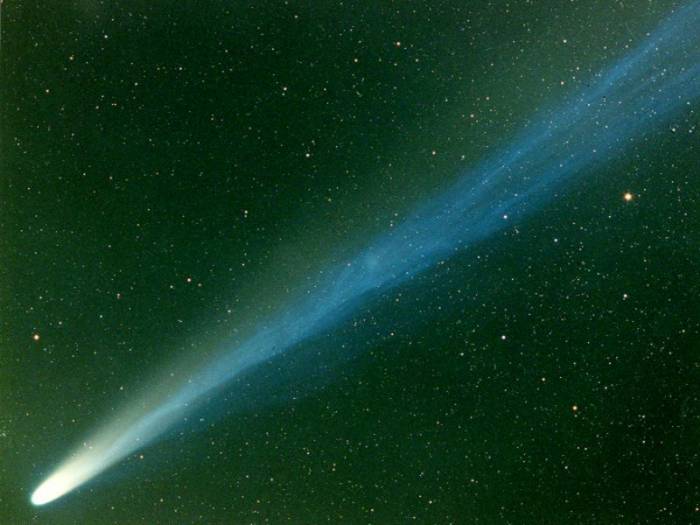
Oh yeah. Hale Bopp. Remember that? But I saw it in 1997 if I'm honest.
I don't know what 1996 means to you either. I hope it contains good memories. (I wrote a section here, speculating on what those good memories might have contained but it just read like a naff, sentimental montage in a equally naff Brit-Chick-Rick-Flick, probably to a sentimental Britpop song, urgh!)

For me, and I did include it in a song, it represented the year of re-education. (No, I wasn't brainwashed or decoded or anything.) 1996 proved to be a stressful year. Emotional too. No more emotional and stressful than others to follow but one I didn't quite feel prepared for. In short there were exams/death of close family member/results/new university/dropping out of uni after three weeks/re-applying/year out.


However 1996 was the year I (properly) discovered literature for myself, not a book I had to read or study in order to pass an exam. There was, at last, in between my weekend job, enough time on my hands to actually read. For pleasure. Out of choice and from friends recomendations I read Knut Hamsun's Hunger, Gogol's Diary of a Madman and Dosteovsky's Crime and Punishment. I hope I'm not sounding like a smug twat. I don't mean to. There is a point to this post. Or there was.
Nothing to do with this post. I just think they're cute.

I know you can't actually eat books but if you substitute the words 'avidly read' to 'devoured' then I devoured these three books within a couple of sittings, often stufffing my face while buttering a slice of bread at the same time, such was my greed. I'd already read Kafka and James Joyce while at college, and many of the classics you'd expect but it was the likes of The Trial, Crime and Punishment and Hunger with their similar themes, characterisations, messages and styles that had me laughing and despairing at the pathetic, godforsaken, insane, passionate, fucked up, fascinating, poetic creatures. I sympathised with the private tortures of the central characters and the horrors of their actions. There was something brutal and realistic about the depictions, the characters, the language and the events, that somehow made the spate of costume dramas and the nonsensical Jane Austin revival at the time seem shallow, empty and frivolous.

Of course I could write a lengthy review about each of these books but even that would be more indulgent than all the indulgent things in this blog. These authors, along with Philip K. Dick, Kurt Vonnegut and Douglas Adams have, if not influenced, then certainly inspired my own attempts at creative fiction.

One Dostoevsky wasn't enough. My friend told me about The Idiot and it's hilarious scene about a man offering to stand on his head in order to be in with a shot of getting a share of someone's inheritance. I bought it, The Double and Notes From The Underground by Dostoevsky. I bought more Gogol - The Government Inspector and Dead Souls. Then I went Russian and Ukraine literature mad. Chekhov short stories followed the plays, Zamyatin's We whose blueprint utopia influenced Orwell's Nineteen Eighty-Four followed (albeit a few years later).

The work of Mikhail Bulgakov, particularly his 'magic realist' masterpiece, 'The Master and Margarita' followed. Then, (partly, but not really) for university course prep, it was the plays of August Strindberg and Henrik Ibsen. Books were making me obese. Albert Camus followed Jean-Paul Sartre, the complete works (except the poetry) of Oscar Wilde, Rip Van Winkle, Hans Andersen/Lewis Carroll biographies, Anthony Burgess and J.G. Ballard, (the latter unread for a while) Tove Jansson's Moomin series... Even some questionable things like Hornby and Fry didn't escape my attention (long since consigned to the charity shops.)

Of course I had read and discarded many things pre-1996, art, music and literature but in 1996 it felt as if I were creating the foundation and level. Maybe I was deluding myself, I don't know. There's many more books on my shelf now waiting to be read, appreciated, scorned and taken to the charity shop but I do love re-visiting the messed up world of Hunger or Crime and Punishment and The Master and Margarita.


Crime and Punishment by Dosteovsky

A murder is planned, a murder is committed and a criminal is caught. We know who the murderer is and why he did it. We aren't sure when he will be caught but we share his guilt and his madness. We suffer with him and by the end of the book we too, like Raskolinikov's silent, unseen, accessory, are redeemed and offered salvation. All the while we witness the suffering of Russia's underclass, the housing problems, the abuse, the paupers, the prostitution, the exploitation and wonder what it will take redress the balance.

Hunger by Knut Hamsun

Published in 1890, this story follows an individual who wants to be a writer. Whether he's talented or not we never really know. He probably is. We aren't sure how long his descent into madness, and his hunger have been threatening to consume him before the novel has begun. To some extent the narrator's situation isn't helped by his acts of madness or his unmotivated kindness. He becomes homeless, follows a pretty woman, invents a new word, and wanders around for much of the novel in a hunger-induced daze. The book is not about what doesn't happen but how the mind responds to lack of creative fuel, food, a place to live, a person to love. Incredibly sad when it's sad but roaringly funny when it's comic.


The Master and Margarita by Mikhail Bulgakov

In most reviews people will tell you a bit about the history of this book in order so you might understand the references (e.g. it was banned in Stalinst Russia, suffered from censoring, ridiculed the party line on religion, lambasted state funded literature) but none of this matters too much, such is the weight of the story. Anyway, its about the Devil and his bizarre associates appearance in Moscow, which certainly surprises the atheists, businessmen, and artists of the city. Indeed almost everyone. Woland's associates include a three foot high cat (that can walk on its hind legs, speak French and pay for its tram fare), a bloke with a funny eye and fang, and an ex-choirmaster, capable of creating disturbing illusions. While they are manufacturing chaos in Moscow, as the mental institutions are filling up, we meet the Master who tells his story.

Parallel to the book is a story about Pontius Pilate, reported by Woland who 'was there', in the last days of Christ.

Then there is the part about Margarita and her adventure with the bizarre troupe, her love affair with the Master and her strange journey she goes on, which involves flight, invisibility and being Satan's hostess. It's a compex, multi-layered novel that encompasses many themes, styles and narratives. Above all it's a tour-de-force which emphasises the need to question everything that the state, whatever state is in power, wishes to enforce and to always encourage thought and creativity. It does this without a preachy, moral, finger wagging tone. So there.


28 July 2011

Free Publicity Part Three: AUTOFAC on Bandcamp


Free music in lossless quality from Autofac.

17 July 2011

Free Publicity Part Two: Autobahn 1

This is a free website to use. It features classic, old, new, obscure, obtuse music videos and performances and occasional specialist themes, the latest being a special on Patrick Bateman. It's fun, entertaining, cool and better than most music programmes that there's ever been. Probably.

You can get there by following the link on the right of this page or if you're lazy- arsed/handed, by going here

That is all.