27 January 2011

His cough hurts me more than it hurts him

I was going to start this feature with a line about when Smirnov K awoke morning he found that he was transformed into a duck. Or 'Someone must have been telling lies about Smirnov K, for without having done anything wrong he was molested one fine morning.' But it's too daft.

Much of his work has been written about, appraised, scrutinised, criticised, re-appraised, filed, stamped, indexed and numbered! Perhaps not numbered. Be it The Trial, Metamorphosis, The Penal Colony, The Hunger Artist and The Castle, Kafka's works have lasted not only because his literary executer, Max Brod, refused to burn them but because they remain as metaphors for the human condition. But also, despite the density of the structure, text and style, because they are great stories in themselves. They create memorable images that stay with us long after the story, they burrow into our imaginations, exposing and reaffirming our own neurosis, they satirise human behaviour, the cruelty we inflict on ourselves as much as we inflict on others, they mock endless, soul-destroying bureaucracy and at times, especially within the vignettes, the imagery is so absurd that it makes us laugh. (I'm thinking in particular of the short stories 'The Bucket Rider', 'Fellowship' and 'Give it up!')
 
I've recently acquired a new collection of the complete short stories of Franz Kafka. Strangely enough I lost my old copy on a Czech Airlines flight on the return visit to Manchester. My partner had been reading it, and as we disembarked, the book was nowhere to be found. Literally nowhere. Because we spent a few minutes looking, a flight from Saudi Arabia had just landed and we then got stuck in a big queue for about 60 minutes. This alone would have been an adventure for Kafka. While in Prague of course we saw various Kafka monuments and references. The Franz Kafka museum was interesting, weird and had a wrongness about it, which added to the experience.
 
What I want to focus on though, for this feature, is Kafka's own concerns and hyper sentivity in his own words. Kafka's own self-analysis, nature and relationships with others is the key driving force of his writing. You might say that about many authors of course and while this is often a major factor, there is often some distance in the work, it concerns the plight of other people, it makes wider statements about the world in general. Or it's a yarn for yarn's sake. With Kafka, however, even if a character is portrayed as a dung beetle or a mole, it doesn't detract from Kafka having to confront himself, his fears, his flaws, his lack of self-esteem and of the cruel world he's living in.
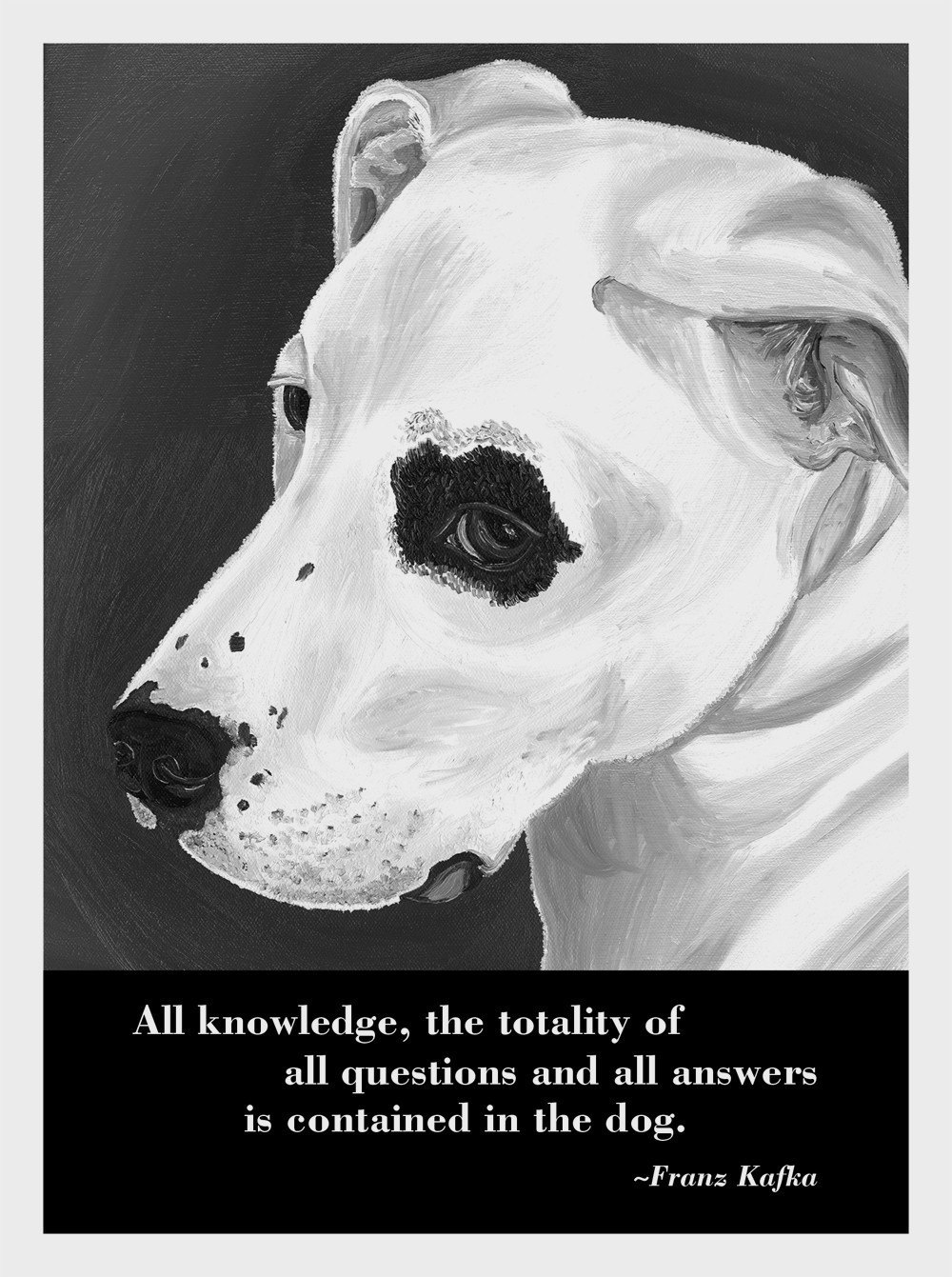
Here follows some extracts and quotes from an assignment I wrote in 2000. It gives an insight and an overview of Kafka's motivations:
 

After getting a doctorate from the Karl-Ferdinand University in Prague he went into Insurance. A stable job with a stable salary. Kafka found it stuffy, tedious and mind-numbing. It was no coincidence that the atmosphere in the office and the formal approach to paperwork and redtape of his posts were captured in a brutally accurate sense in stories such as The Trial. In the midst of all the tedium of his work he found time to release his tension through his writing, which, on the occasions he found  peace and quiet, he found pleasurable.

23 September 1912 (From his diary)

‘This story, The Judgement I wrote at one sitting during the night of the 22nd-23rd from ten o’clock at night to six o’clock in the morning. I was hardly able to pull my legs out from under the desk they had got so stiff from sitting. The fearful strain and joy, how the story developed before me, as if I were advancing over water...only in this way can writing be done, only with coherence, with such a complete opening out of the body and soul...’


In spite of his job and long hours at his desk at home, he also concedes in his diary on November 1912...in a letter to Felice, his fiancee.


‘My mode of life is devised solely for writing...time is short, my strength is limited, the office is a horror, the apartment is noisy, and if a pleasant, straightforward life is not possible then one must try to wriggle through by subtle maneuvers.’

‘My life consists, and basically always has consisted, of attempts at writing, mostly unsuccessful.’


Kafka would write all through the night with barely two hours sleep before he was back at work. 

‘..at 10.30pm (but often not till 11.30) I sit down to write, and I go on, depending on my strength, inclination, and luck, until 1,2 or 3 o’clock-once even till 6 in the morning.’


Sitting at his desk he would note observations and ideas in his Octavo Notebooks, draft letters to his corespondents and work on stories. Kafka himself conjures up this image of this lonely, tortured, misunderstood artist, alienated from society and human affairs only to find temporary solace, sitting in solitude at night by his desk writing. Writing in spite of writing.
           
 ‘... writing means revealing oneself to excess...This is why one can never be alone enough when one writes, why there can never be enough silence around when one writes, why even night is not night enough...I have often thought that the best mode of life for me would be to sit in the innermost room of a spacious locked cellar with my writing things and a lamp. Food would be brought and always put down far away from my room, outside the cellar’s outermost door. The walk to my food, in my dressing gown, through the vaulted cellars, would be my only exercise. I would then return to my table, eat slowly and with deliberation, then start writing again at once. And how I would write! From what depths I would drag it up!’

His stories are more often than not, amid all the philosophical interpretations, concerned with identity and the role of the individual and the objects around them. How they relate to each other, how they interact, the significance of such an interface. If I was forced to commit myself to a significant theme which pervades directly to his own experiences it would be that of identity. Kafka was many roles to many people and not really comfortable in any of them. Was it any wonder that most of his characters like Gregor and Joseph K didn’t know who they were as well?  One of his techniques that give weight to conflict and humiliation in the course of his journey for truth was Kafka’s own personal obsessions. 


29 January 1915 (From Kafka’s diary)
‘Again tried to write, virtually useless. The past two days went early to bed, about ten o’clock, something I haven’t done for a long time now...’

7 February 1915
‘Complete standstill. Unending torments.’

10 February 1915
‘First evening. My neigbour talks for hours with the landlady. Both speak softly...and therefore the worse. My writing, which has been coming along for the past two days is interrupted, who knows for how long a time? Absolute despair. Is it like this in every house? Does such ridiculous and absolutely killing misery await me with every landlady in every city?’

11 February 1915 (Letter to Felice)
‘All I want is peace, but the kind of peace that is beyond people’s understanding. ...no one in any ordinary household needs the kind of peace necessary to me; neither reading, nor studying, nor sleeping, in fact nothing needs the kind of peace I need for writing.’

‘...the urgency with which I long to get out of this room, and out of this world, were equal.’

‘...the lodger (in the next room) coughed twice yesterday, by today it was more often, his cough hurts me more than it hurts him.’

Eventually,

1 March 1915

‘By a great effort , after weeks of preparation and anxiety, gave notice; not entirely with reason.’

For Kafka the torment didn’t end there.


In Metamorphosis Gregor is ashamed and his family are disgusted at his appearance as a Dung Beetle. If Kafka ever felt in his life insignificant and worthless, and felt strong enough to give vent to this problem in his stories and diaries, it wasn’t without reason. Hermann Kafka, was Kafka’s successful, well built and domineering father. He was a heavy influence on some of Kafka’s characters and ideas. As far as Kafka himself was concerned, all of his works were inspired in some way or a reaction against his father.

November 1919 (Letter to his father)

‘The dislike that you naturally and immediately had of my writing was...welcome to me...My writing was all about you...’

In November 1919, Franz Kafka sought to address some of the problems he had with his father in Letter To Father which was posthumously published by Kafka’s best friend, Max Brod. It was one of Kafka’s most autobiographical moments, laying bare his feelings for his father and their relationship and how it influenced the sensitive Kafka as he grew older. The young Kafka couldn’t live up to his father expectations or compete with him financially and physically but he did have his intellectual independence. Kafka resented the ignorance his father had to Kafka’s sensitivity. If Kafka had one retaliation for his father in the course of the letter it was when the subject turned to Kafka’s writing. It was understood that his father never read the letter.

Another aspect of Kafka’s life, that he was critical of, was in human relationships with friends and lovers. Of the little spare time he had, he was an avid reader of his own works and could often be found frequenting cafe’s and literary circles with his best friend Max Brod, reading aloud some of his many works. He was obsessively critical of his own worth as a writer and very little of his literary output was actually published during his own lifetime. Kafka entrusted his literary legacy to Max Brod and asked him to be his literary executor when it became evident that Kafka’s consumption was growing fatal. Brod defied Kafka’s wishes and published a wealth of material from Kafka’s notes and unfinished manuscripts after Kafka’s death, arguing that Kafka’s comments were actually tongue in cheek.

Of Kafka’s relationships with the women in his life they were complex and intense affairs mainly carried out in the privacy of the words on the page. Of the women he was involved with were Felice Bauer (whom he was twice engaged to), Milena Jesenska and Dora Dymant. Arguably the most intense of the three and most frustrating to conduct was his union with Felice. They only actually met a handful of times and most of their correspondence seemed to be misunderstood, apologetic, introspective affairs. They were obsessed with trivial episodes of why they couldn’t be together, why Kafka wasn’t appropriate for her and vice versa. He wrote to her daily, had an obsessive habit for detail and would question her when she was slow in reply. On her part she couldn’t understand his works and he felt put out whenever she cited other local authors whom he felt were generally inferior. If you look at the relationships in some of Kafka’s works between the women and the central character they are often complex affairs,  presenting women in an almost aggressive and intimidating vein.

Kafka expressed awareness of the intended effect of his work. This comment taken from his own diary entry dated 13 December 1914 is perhaps the most poignant example of the underlying message (if there is one) of his works.

13 December 1914
‘...the best things I have written have their basis in this capacity of mine to meet death with contentment. All these fine and very convincing passages always deal with the fact that someone is dying, that it is hard for him to do, that it seems unjust to him, or at least harsh, and the reader is moved by this, or at least he should be.’


Bibliography

The Diaries of Franz Kafka by Max Brod (Ed.) (Penguin, 1978)


Letters To Felice with Kafka’s Other Trial by Elias Canetti by Erich Heller and Jurgen Born (Ed’s) translated by James Stern and Elizabeth Duckworth. (Penguin, 1983)


Letter To Father (Pg. 555) (trans.) Ernst Kaiser and Ethne Wilkins. (Secker and Warburg, 1976)


The Trial (Introduction) by J.P Stern. (Picador, 1988)


16 January 2011

15 January 2011

Woody Allen 1971

I love Woody. Especially those early, funnier films.I'll write more about the man and his films at some point in the near future. For now here's a very interesting interview I found from youtube. It's taken from 1971 not long after he wrapped work on the film Banana's. The interview, split into four parts, is not only piss funny, but reminds us what a genuinely, inventive comedian he is, certainley he was at that point in his life. The interview is also interesting in that it seems to be an unscripted 37 minute jam with Barry Took (some have suggested it's Peter Cook), the absurd answers and on the spot questions, not unlike the 1994 Why Bother? between Chris Morris and Peter Cook. You really get the sense of that the likes of Armando Iannuci and other leftfield comedy writers and performers must be in part influenced by Allen's absurd imagery, the sight gags, the playful language and self-deprecation.
Above all I'm posting it because it's funny.


05 January 2011

Klaus Kinski didn't write this

Hope you like the new basic, design template. This is a blog where I'm nice about things that I like and the things that I think you might like or should like too. There's lots of cool, charming, heart-warming, passionate, funny, sexy and captivating subjects/people/things I want to share with you. Like this:
 

The cups should be tiny really.

Or this:
 
TuneIn Radio
 
My favourite app of the moment. Just 59 pence. I'll review, evalaute and make you laugh sometimes. That's why it's called His Light Materials. If you want cynicism, hate, bitterness and anger go to the other side of my ego, here
 
Oakey doakey! See ya!
 

15 December 2010

Bacon and Egg barm


Right. Eventually.

I've just spent about ten minutes trying to find an appetising picture of a bacon and egg barm. The above pic is the best I could find. It'll have to do for now untill I take my own pic. Sorry. All the other pictures I've seen on google images are just not right. They either feature toasted sandwiches, brown bread, bacon rind, or have the wrong ingredients.

So this post is about bacon and egg barm. Forget all the so called perfect ways to make the (sigh) 'perfect' bacon and egg barm like this Perfect bacon sandwich according to someone who has it wrong (who suggests you use thin bacon rashers), read what I say, take it in and try it out. It's simple.

BREAD.
Use a barm cake. Even though it's still a barm cake, they might be known as muffins or rolls where you come from. But they're not, they're called barm cakes. You need something fresh, soft and thick, but not too dry and doughy. It's pointless telling you what brand to buy because they might not stock it where you live. So use a white barm cake you can trust and enjoy. Don't be tempted to use crappy things with grain in them, or brown barm cakes. No point. You don't want to be distracted by getting the bits of crap in your teeth. Now, butter...

BUTTER/MARG
No point being too precious about fat and sugar content. You're having a bacon and egg barm cake for christ's sake! I'd suggest you use butter. Organic or otherwise, doesn't matter, but make sure it's not been in the fridge too long. You don't want to graze the bread when you're liberally spreading the butter. So, barm cake, buttered, and pressumably the bacon and eggs are cooking, but what eggs and bacon will you need?

BACON
Get thick cut. I know crispy bacon tastes gorgeous but on a sandwich, especially soft bread, the texture when you sink your teeth into it, only to be met by something brittle and frazzled is really unpleasant, no matter what the taste. You are still able to get the thick cut rasher a crispy tinge, whilst the flesh is cooked and tender. Then when you bite into it, you have more consistency. Best get thick cut, smoked or unsmoked, doesn't matter. Get a couple of rashers from the local butchers. Won't cost you much. I'll tell you how to cook it soon.

EGGS
Get them free range, medium sized, chicken eggs. That's all. No rocket science involved here.

SAUCE
HP Brown sauce or Chop Sauce, more tangy or spicy or Daddies brown sauce. Any of those will do.

HOW TO COOK IT.
Once the barm and butter have been prepared, you can slide your bacon rashers, either under the grill or place on a George Forman grill. Cook till the rind is developing a crispy crust. Takes about five minutes under the GF grill, about 8-10 mins under a standard grill.

While the bacon is sizzling, crack one or two eggs, preferably just one egg in a frying pan. In a perfect world you will own a Tefal frying pan. But it doesn't matter if you don't, it'll still fry, won't it? Make sure the yolk is facing upwards and the egg has been cracked properly, so it looks how a fried egg should look. If you haven't cracked it properly, the egg white will run everywhere. If this happens, try again with a new egg. Make sure also that the frying pan is clean or the whites will have burnt, charred bits everywhere. Not very nice. So clean your frying pan regularly. Cook the egg properly, flicking some of the cooking oil over the yolk to make it have a pink tinge. I've thought about how else I might describe it but I can't. You know what I mean. Don't be tempted to break the egg up or any of that crap, it's a friend egg not a scrambled egg. It needs to be intact. Now, because you don't want your egg yolk running everywhere when you sink your teeth into the sandwich, you have to carefully flip the egg over so you can seal the yolk, and cook it to the extent that it will be less runny.

Right once done the egg will be the second thing you place onto the buttered barm, not before dabbing it lightly with kitchen roll. There will be a bed of bacon, hopefully, already blotted by the kitchen roll, with a pinch of salt and brown sauce on the top, waiting.

That's it really. Sorry if I was flippant.

23 November 2010

The Moomins

On weekedays in 1983, in five minute slots 'Childrens ITV' broadcast The Moomins. I'm not sure if I enjoyed this meandering tale of felted Hippo/Troll-like snout creatures. There was something odd and gloomy about the whole thing. Maybe it was the animation which in those days on a portable black and white television did seem crude. But something remained. Ambivalence.


A few years later I saw a cartoon version. Even though I enjoyed it, I couldn't stop thinking about the quirky early 80s animation. In the mid 90s I read most, if not all of Tove Jansson's Moomin books. It wasn't just the darkness that came through but the wistful feeling of nostalgia, summer adventures, cosy winter evenings, hibernation. It was about love, loss, friendship and in some respects, death, emptiness, but celebrated the here and now.

The world of the Moomins is not just familiar but slightly odd to those who live in Scandanavia as much as The Wind in The Willows is to the English countryside, but it's perhaps quirkier. It's setting Moominvalley is Tove Jansson's ideal Finland, a childhood Finland, of valleys, lakes and mountains, with little if any, human presence. The characters have something we can all relate to, in much the same way as all great works of literature. (This feature sounds a bit shit, doesn't it). Basically I love the Moomins. I love reading about them, I love the brusque, pompous and pensive Moominpappa who constantly is working on his memoirs and is just as attached to them as he is to his top hat. What's sweet is that you can read some of his memoirs in a couple of Tove Jansson's Moomin novels. Little Moominpappa and his friends, who bare close resemblence to Moomintroll's friends. Snufkin is another favourite, an idler, a hippie perhaps, a bag head, who knows, but full of wisdom.Maybe he's Moomintroll's best friend instead of Sniff, as he breaks Moomintroll's heart when he leaves on his travels, a restless soul.  If Snufkin is comfortable with silence and reflection, Little My, is more at home with noise and chaos, speaking the truth no matter how much it hurts and making her presence felt everywhere.
Then there's Sniff. Dopey, well meaning, silly, kind of like Captain Hastings in Poiriot, but without the pomposity, Moomintrolls's best friend, even if they scrap now and again. The leading roles of course go to Moonmintroll and Snork Maiden. Whilst most portrayals of Snork Maiden present her as an air-headed bimbo, she has a sweet and innocent relationship with Moomintroll, boyfriend and girlfriend, even though you could be forgiven for thinking that they look like brother and sister. What this reveals about Moomintroll is not only his love and loyalty but his compassion. Moomintroll in many ways represents us as children, an explorer, a dreamer, a naive, fragile soul. And his snout. You can stroke it.

There's a Moomin film finally coming to a cinema near you soon if it hasn't already. Based on Comet in Moominland it features the Moomins in the own road movie, under the threat of impending doom. There's probably no bad language in it, and there's even less violence but if it gets under the skin of children everywhere, it can only be for the best. It's in 3D too which might impress many of you, but what pleases me is how close it recreates that early 80s stop animation version and transforms it into a multi-coloured and faceted panoramic spectacle. Bjork has also written a song for it as well. Fitting.
  

01 November 2010

Sometime in the future

This is a band that if I'm not playing them constantly, or talking about them, mythologising how relevant and important they are in the pantheon of the greatest music and bands of all time, I'm waiting for them. Enjoyng them but always waiting.They have a new album out next year. Or 2012, or 2016, who knows. Not even Warp know. You could be forgiven that the delay is because their perfectionism is the reason they need to explore, experiment, mix, fix, tweak and wait. They might just as easily be great at procrastinating. But we wouldn't know. We'll never know. It's what the fans admire. Bloody mindedness, perfectionism and the waiting game, but beautiful music, myths, lies and legends often follow the great bands around.


In the meantime the fans are going stir crazy. The fans here at least. Since the Trans Canada Highway EP in 2006 contemporay and popular music has gone through a few but not earth shattering changes. Fans have been speculating what the new album might sound like, not in the sense of what other music it might ape because it won't sound like anything other than Boards of Canada. This is the dream of other artists, not to sound like Boards of Canada but to sound like themselves, to become a genre of their own. Although from the fan made videos and the BOC community they are more Boards of Canada than Boards of Canada.

There's something kind of anti-corperate, certainley in the tone and assembley of the library footage chosen but also ambivalent and ambigious. It's hard to place. I sometimes go past a place called 'Cemex Aggregates' on my way to Manchester, whenever I take the train. I've associated it, and its logo so much to Boards of Canada that it almost feels significant and iconic.


So what is it about Boards of Canada that the fans love about them? It's partly the stuff already metnioned above, along with they washed out colours of distant, childhood summers. It's in part the sinister undertones of their mixes, the music somehow encapsulates what it is we can't express about those lazy school holidays in the early 80s when there was nothing to do and most of our better off friends were away somewhere. It's also in some of the themes which Ghost Box Records have exploited with the likes of Advisory Circle and Belbury Poly, that British public information mentality. The music is comforting but with an undercurrent that you might die soon. Or something incredibly evil is happening in the world and you can't exactly put your finger on what it is. Listen to 'The Devil is in The Details' or 'Alpha and Omega'.

The appeal for some fans is either the hidden secret messages in the music and the nods to cult/religious iconography. Now there's a few websites dedicated to unravelling these ideas which range from bonkers to intriguing but I think BOC just like to fuck with us sometimes.

Seems like a fitting place to leave this feature.


Also checkout this mix too.

http://soundcloud.com/strictly/sometime-in-the-future

09 September 2010

Who are you?

We are in a limo, travelling along the promenade in Nice. From someone's point of view we can see a hand picking up something that looks like Southern Comfort before returning to a cigar. Along the prom there are high class prostitutes touting for business. The lights and palm trees filter through the windows, many colours.  Sounds of traffic through the open window, of the sea, of disco music. We feel that it's the late 70s and this is soon revealed when a newspaper (New York Times) is picked up, revealing some major news event. As the pages are turned, and there's small story that reveals the accidental death of an advertising executive. We don't find out who it is. We hear the horn being honked. The car crashes. The horn resonates. Don Draper wakes up, in 1965, in a cold sweat.


That was a dream I had. It could easily be the opening of a new season of Mad Men. 'Who is Don Draper?' is the tagline of Season 4, and while that will be banged on about as the series progresses, it's clear that we already know what Don Draper does, and if you've been following it, we know where he suppoesedly got his identity from. That's of course if we trust his memories. We don't have to. There is reason to believe that we shouldn't trust his memories due to his complex personality and his infidelity.

If you haven't seen Mad Men at all then you should. You're in for a treat. It's not just a sleek satire, a triumph of style over substance. In fact it's the substance of the show that makes the drama. That so many TV critics don't really get it, so keen they are to rant on and on about the fashions, the smoking, the sexism, misses the point. From the opening credits of a man throwing himself off a building, it kind of remined me of Joseph Heller's 'Something Happened.' The narrator of that novel could easily be Don Draper. The show, in terms of status and the main character's infidelity could also exist in the same world of Arthur Miller's 'Death of a Salesman.' It's certainly directed as if it were a piece of theatre by Miller, Ibsen or Chekhov in that it's about people, about insecurity, status, and whether it's culture and backdrop is middle America in the 60s, the show's backdrop and psyche easily slots into todays 24/7/social  networking/shopping/aspirational culture.

But it's heart, if it has one, which it does, is Donald Draper. When you ask the question 'who is this person?' you're also asking 'Who are you?' It doesn't become a trite phrase then.You can be daft and answer 'well I work at Hobby Craft and I enjoy strangling cats...' but that doesn't go to the heart of the truth. Obviously the show as a whole is an ensemble piece with every character having just as much mystery and social anxiety as Draper. The women are stronger than the men in the show, even if that strength means knowing when to hold your tongue or wear a tighter skirt. You feel that any one of the characters could go crazy in the office with a shotgun or throw themselves out the window. Pete Campbell especially.


In earlier seasons Don Draper has it all, the respect of his colleagues, money, status a perceived successful marriage and access to any women he desires. You know it will fall apart. You know he'll lose everything and in some respects go back to being the kid in the depression who had nothing. But do we trust his memories? What strikes me about Mad Men is that it's a show that can more or less go in any direction, once it starts to slowly collapse. When reality collapses around you, you're either left with the brutal truth or sheer fantasy. Mad Men, a ficitonal show which in many sense feels like a  dream world, could be a figment of Don's imagination. Mad Men could be Don Draper's heaven/purgatory/hell much in the same way as Gene Hunt was the master of his purgatory in Ashes to Ashes. Although with Mad Men, if this route were explored, I feel it would have more plausibility than a purgatory for coppers blag.

So my opening intro could make sense in Mad Men, if Don Draper becomes someone who even didn't think he was, or if in fact Mad Men were somehow his disjointed autobography. It's intriguing. I doubt that the show will go down the fantasy route but you feel it could do it with seamless ease, that it would already add to the rewarded repeated viewings. It's to the credit of the writing, direction and performance of John Hamm that we care who Don Draper is.

So there you go. Mad Men is great.

07 September 2010

The White Room

I'm having my downstairs loo converted to a cloakroom. It'll all be done in white, although I'm not sure if we're having a white carpet. Probably not. Anyway, I want to call it The White Room. The fact that The White Room is incidental but it's a cool name for a cloakroom isn't it? Because I'm living in a democracy in this house, I doubt it'll be called The White Room but The Cloak Room. Which untidily brings me to The KLF.


Whether or not they were in the music business for a laugh or not doesn't matter. They loved pop music, understood it and made fantastic pop/stadium house/rave records. They pissed a few people off as well, which is always good when it's the type of people you want to piss off, i.e. Brit art upstarts (Rachel Whitbread was awarded K Foundation's prize for the worst art work), the music industry (firing blanks into the audience and dumping a dead sheep at the aftershow party at the 1992 Brit Awards) and the general public when they did or didn't burn a million quid. In a sense they were similar to Bansky, with their defacement of billboards and self promotion. But none of that matters to me, only the music, even if they are bored to death of making popular music.


Listening back to The White Room, you could be forgiven for thinking that the tracks The White Room and No More Tears could easily fit into today's pop climate, and the hands in the air, housey piano vibes of Last Train To Trancentral or out and out rave of What Time Is Love?, knock spots of Dutch trance. To describe their music to those poor souls who haven't heard it just imagine that you've died and come back to life in a damp field, somewhere in the north of England after a thunderstorm and the rays of sun are appearing. You get to your feet and hear this euphoric music and realise that there are millions of people in the field dancing, loved up, their worries far away in the previous world. That is the Church of The KLF.

So yes, The KLF are ace. Googling them will bring up all kinds of myths, rareities and stories.  And you'll find The Manual: How to Have a Number One The Easy Way

http://piratecinema.org/the_klf/the_manual.txt

I'm sure Simon Cowell has read it.

21 August 2010

Summer Moved On


This is following an article I wrote last year, when it was revealed that A-ha were going to call it quits after the tour this year. This is still the case. They have just released their last video for their final single, 'Butterfly, Butterfly'. I'm not always sentimental, but it's a moving promo, directed by Steve Barron, who directed the classic clips for Take on Me and The Sun Always Shines on TV. Here it is:


A-ha Butterfly, Butterfly (The Last Hurrah)

A-ha


Let's be clear here. A-ha are the business. It's no secret that journalists are lazy. They like to cut corners. Less serious ones will happily quote and paraphrase from the public domain. Therefore you may have read articles which can't resist mentioning Morten Harket's chiseled cheek bones, or how are they have been championed by Keane and Coldplay, which depending on your point of view may be not too flattering.


Maybe one truism, is that they have been misunderstood, by a music industry and a public that in the 1980s went along with the hype and the teeny-bopper label. To an extent they went along with it for a few months, curious, amused, but when it was the cover of Rolling Stone magazine or Q they wanted to make, the likes of Smash Hits and Just Seventeen beckoned. It's hard to understand, looking back, what their popular fans of screaming adolescent girls saw in their music with songs about alienation, existential angst, identity and loneliness. What the more discerning fan heard was something deeper than the simplified europop tag. This wasn't a band who were manufactured. Most of the songs in the early days were written and produced by Pal Waakaatar (now known as Paul Waakatar-Savoy) From the 1980s albums 'Hunting High and Low', 'Scoundrel Days' and 'Stay on these Roads' there was only actually a handful of songs that was close to the unashamed teen pop format.


I wrote a short review of 'Scoundrel Days' recently, in appraisal of their recent album remasters. This is what it says;

'Scoundrel Days' was the album I got for Christmas which I unwrapped about a month early to listen to it. This, their sophmore album, continues and develops the sound and themes about escape and alienation from 'Hunting High and Low'. The album begins with a murder (Scoundrel Days) and ends with a prison sentence (Soft Rains of April). Not the subject you'd normally associate with so called teeny boppers. But A-ha aren't and never were teeny boppers. You'd be hard pressed to find songs about death, alienation, betrayal and adjustment disorder in the back catalogue of Duran Duran or Wham! With A-ha you're dealing with a different beast altogether, one that draws its influence from the work of Greig, Munch and Ibsen as much as The Beatles. For me, 'I've Been Losing you' (yet another song about murder perhaps, of madness?) is one of many highlights, signalling a rawer edge to A-ha's soud, a glimpse into A-ha's future, whilst still provoking an emotional response from a heartbreaking and beautiful refrain.


Further still 'Manhattan Skyline's' 'I don't want to fall again/I don't want to know this pain' is not the kind of platitude you get in most pop songs. It comes from the heart, from Waakatar-Savoy's youth, the pain of a broken down relationship. 'I'm trying to keep my newspaper dry' has to be one of the most heartbreaking lyrics of all time. My personal highlights include 'October' and 'the Weight of the wind', songs about loss, escape, dislocation and paralysis in a strange envioronment surrounded by strangers, together but yet alone. These seems to be recurring themes in A-ha's world, from 'The Blue Sky' to 'Minor Earth, Major Sky'...living inside an existence which is often unsettling, aggressive, dangerous but essentially lonely. Sometimes it isn't the world outside but the one in your head. The final track of the album, which owes some sonic debt to The Moody Blues is devastating and haunting. 'Time passing so slow...' A-ha make the world go round that little bit faster. Pain and pop music are not stances but ways of life, which A-ha have embraced and their fans have adored them for. It was always about the music and words, the sentiment, the sound. A-ha made sense to me as a 12 year old, and now as a man in his 30s because they went above and beyond what was necessary in pop/rock music with intelligent songs not just about falling in love but the human condition and our existence. Nordic, deep and beguiling.


As the years passed, and the band gained more control over their presentation and their production the serious songs about murder, dead bodies, betrayal continued only with less of that 80s sheen and with a 90s rock sensibility. It was probably after 'Crying in The Rain' that their glory supporting fans desserted them leaving the real supporters to worship them all for themselves. Ironically around this time they recorded 'Rock in Rio 2's' biggest attendence of 195,000 spectators. After a brief spell apart to pursue solo directions, they returned back to the fray with the albums 'Minor Earth, Major Sky', 'Lifelines,'  'Analogue' and the top five album 'Foot of the Mountain' (which Magne wanted to call 'Digital') It's just a shame that successive record companies and the media haven't quite got out of bed when its come to supporting the band, and maybe unfairly they'll always be remembered as that band 'with that cool animation video' mocked in Family Guy, or 'The band whose singer has chisled cheekbones'.


They still continued to be very successful in certain territories, such as native Norway (where they recently held a concert for 125,000 spectators) and Germany, the biggest market in Europe for popular music, and are still in many music fans hearts acknowledged with some kind of affection, nostalgia perhaps. But for me, their success and relevance comes down to a few basic factors:


1. They write and produce their own work which happens to be of a very high standard, musically and soundwise. Magne and Paul can really play their instruments, and each others (settle down now), and other people's. They don't pose and mime with them.


2.They are from Norway. These roots undoubtedly are relevant as they take a different, maybe darker approach to the world around them, which makes a change from the UK and US perspective, which in the main doesn't offer anything particulary unique. Their songs capture the Autumnal, fading summer mood, very much like an Ibsen for the 21st century set to music and lyrics.

3. Morten can sing. And singers are ten a penny. In a world where everyone wants to be a singer, where everyone can sing, where everyone, however, doesn't actually have their own voice but mimics old rnb singers or sounds like Green Day, Morten is best. And technically he's pretty fab. His voice is distinctive too, not in the Mark E Smith/Shaun Ryder, 'we really are fucking tone deaf' sense of the word but in the 'I am Morten. I can sing. This is me. And I'm good. I don't have to be shambolic.' Of course he is quite a prickly character, it has been said.


4.Even some of their songs have cryptic and intriguing song titles, 'The Blood that Moves the body,' 'Sycamore Leaves,', Forever Not Yours,', 'Analogue,', 'Celice', '(Seemingly) Non Stop July,' 'October', 'The Weight of the wind', 'There's never a forever thing', 'Angel in the snow', 'Locust'.


Their 2 disc compilation '25' is out soon, taking in album tracks and singles. You can also buy 'Hunting High and Low' and 'Scoundrel Days' remasters, which includes bonus discs of demos and remixes and they will come to the UK in November 2010 for their final live dates. Not many bands have the opportunity to have a clean end to their career.


07 August 2010

FIAT 500

I don't own a Fiat 500, neither can I afford one, which makes appreciating one rather fake and stupid. But ooh! Just look at it! Isn't it cute?!?


25 July 2010

The Hurricane


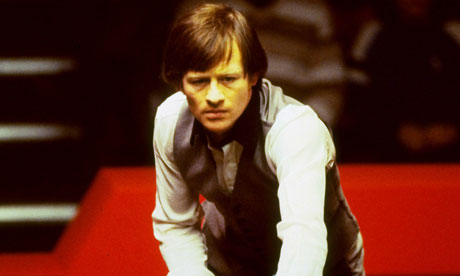
I'm sure at some point there will be a TV film called 'Hurricane' staring that guy who played Charles Bronson. I'll probably watch it, just to relive the 1982 World Snooker Championships, witness this twitching figure, creeping around the table, ready to sink another ball, before the ref has had a chance to place a colour on the spot, his concentrated facial expression barely  concealing theinner rage. Even watching Higgins relax, if relax is the right word was just as entertaining. There at the small table, he'd be sucking cigs, surrounded as he often was with good luck cards, birthday cards or get well soon cards. I remember one championshp one when he had a cold he took a little pot of honey, spooning it into his concoction. 
I admired Higgins. He was my first hero, before Zico. My nan disliked him. He wasn't a nice boy like Steve Davis, he also wasn't as boring. Over the past thirty odd years you'll have comne across many terms to describe him; words Hellraiser, Pisshead, Irish, Wildman, Genius, Hurricance. But I don't think such terms suitably descibe his complexity or indeed his talent. Like George Best at the top of of his game he  was the greatest in his field. Any clearence or a visit to the table by Higgins was far more entertaining, shambolic and inspirational than that any of other snooker player before or since. And at the boorish who want to question his talent or dedication, as far as I'm aware,  he was forever working on his game and putting in the hours. I doubt you could fluke TWO world snooker championships, and in such style. That he didn't capitalise on this, wasted it, pissed hs life away, however you wish, and Im sure the tabliods will, wish to term it, was obviously the tragic. part. Although his reputation off the ball preceeded him, as a child I identified with the spirit of the kind of underdog (which he was far from), the gentle voice and in some cases his non compliance to the establishment were, I felt admirable, when placed alongside swotty Steve Davis and all that lot. 

I'm against shambolic rebels when they have no talent or skill, when they are overated, overhyped. Alex Higgins wasn't overated. And certainly never hyped. He was creative, imaginative, talented and his 1982 campaign, encapsulated all that was characteristically Higgins, how his style and inventiveness outshone his contempories and brought a new lease of loife to the sport. He's a kind of fairytale anti-hero who you'd tell your grand kids about. I'd even say that although snooker was generally popular in the 80s, it was the likes of Higgins contributed enormously to its widespread popularity. The 1982 semi-final between with Jimmy White needs to come out on the cinema. For non snooker fans like myself, it is the best game you may ever see in your life. 'Hurricane VS Whirlwind 1982'. 


11 July 2010


Perfection. 1991.
There's not many albums I know of where from start to finish, every track, every sound, every riff, every chord progression, every lyric, every song title are suitably  written, produced, arranged, mixed and sequenced to form something that not only works as a piece of art but as a perfect pop album.

Electronic's debut album is that album.

This original edition doesn't even have 'Getting Away With It...' on. I would even risk upsetting fans of The Smiths, New Order and even Pet Shop Boys to say that this album actually sits above the likes of Please and Technique (and most other classic albums by other artists as well).  It carries similar lyrical sentiments about relationship breakdowns, communication breakdowns, solitude, alienation and existence and still remains life affirming. But the chill of the icy synths are warmed by the soul of the beats, bass, strings and guitars as well as Bernard's fragile and heartfelt vocals. Beautiful.


09 July 2010

Milk

Milk is good. Drink milk. If there isn't any milk, find a cow and milk it. I've been a milk drinker for pretty much all my life. The best milk I ever tasted was probably whole milk from the Unigate milkman, which came in those sexy, curvy bottles like this:


As far as I'm aware I only occasionally see pure orange juice in these bottles. But this isn't a blog entry about bottles. Maybe it's my memory but I swear that milk tastes better from the bottle. Anyway it became cheaper, cooler or better for the earth's crust or something to sell milk in plastic bottles and bags, in supermarkets. Milkmen became rare, supermarkets became bigger and farmers and independent diaries found it difficult to compete. Thus the milk, I think went downhill. It became homogenised, so in whole milk you didn't get that creamy texture among other properties. All of a sudden things went through some kind of filter process that I don't understand which was used as some kind of selling point. Take Cravendale for instance.  I try and only buy the organic, Jersey milk now if I can help it. I saw a programme about the history of milk production on BBC 4 featuring the Gosling's. It impressd me to such a degree that I will pledge to buy their products from the Able and Cole online shop when I have more money. What impressed me about it wasn't just their enthusiasm and passion for good milk quality but how much love and respect they gave to their cows.
So there you have it. Milk.